Building a Faceless AI YouTube Channel: Good Info, But What the "$20,324 in 2 Months" Post Doesn’t Say
A creator claims $20,324 profit in two months running a fully automated faceless YouTube channel using 8 AI tools costing less than $100/month. This is more solid than it might appear. The income timeline and the skill requirements hiding behind "just use Claude" are not fully disclosed.
This week's review comes from a pitch thread on X by @0xFrogify
THE OPPORTUNITY
A creator claims to have built a faceless, largely automated YouTube channel generating $20,324 in two months using eight AI tools on a budget of roughly $100/month. The pitch: AI has eliminated the production bottleneck for YouTube content, meaning anyone with a $20 Claude subscription can build a channel that runs itself 4–5 hours per week. Revenue comes from AdSense, affiliate links, digital products, and sponsorships.
HOW IT'S EXECUTED
The eight-tool stack works as follows:
- Claude ($20/month) — scripts, niche research, titles, descriptions, and prompts for every other tool in the chain
- Kling 3.0 (~$0.50/clip) — text-to-video and image-to-video generation for YouTube Shorts, 9:16 native output
- Veo 3.1 (Google AI Premium) — reserved for 1–2 "hero" videos per month requiring cinematic quality for sponsorship pitches
- Nano Banana Pro (free + paid) — thumbnail and visual asset generation, A/B tested 5–10 options per video
- ElevenLabs (free–$22/month) — cloned voiceover, unique per channel to avoid algorithm suppression of generic AI voices
- CapCut (free) — final timeline assembly, caption generation, and music syncing; the only manual step
- n8n ($0–$24/month) — automation pipeline pulling trending topics, routing to Claude for scripts, then to ElevenLabs for voiceover, delivering a near-complete package via Telegram for approval
- Lovable (free + paid) — built a landing page selling a $19 prompt pack once AdSense reached $5K/month; added $2,400 in month three
The 90-day roadmap:
- Publish 3–4 videos per week for the first 30 days without optimizing
- Identify the top performers in days 31–60
- Build the n8n automation, then add a second monetization layer (affiliate, digital product, sponsorships) in days 61–90.
WHAT'S CREDIBLE
This is one of the more honest tool-stack breakdowns we've seen. The specific tools named are legit and well-matched to their stated purposes. Kling 3.0 is great for AI video generation, n8n is a genuinely powerful automation platform, and ElevenLabs voice cloning is an underappreciated by most people. The "mistakes" section is unusually candid: starting in the wrong niche (entertainment vs. finance), using the default ElevenLabs voice, stopping at 8 videos, and delaying automation are all real failure modes that other pitches on X never acknowledge. The per-video cost math ($6 AI vs. $1,200–$1,800 human production) is probably accurate. The algorithm insight of 20–30 uploads before YouTube begins pushing content matches what experienced creators consistently see.
WHAT'S OMITTED OR OVERSTATED
The $20,324 figure is presented as profit, but we have no visibility into what was spent to generate it. Kling clips at $0.50 each add up quickly across 30–40 videos with multiple takes. ElevenLabs, Veo 3.1, Nano Banana, and n8n cloud costs stack on top of Claude's $20. The actual monthly tool spend is likely $150–300+, not the implied "price of a phone bill.” It’s still favorable economics if the revenue is real, but the post understates it.
The channel niche is never disclosed, which is the most important piece of missing information in the entire thread. Finance and tech channels earn $15–30 RPM. Entertainment channels earn $2–5. The creator admits switching from entertainment to finance doubled revenue from the same view count, then declines to say what niche they're actually in. Without that, the "$10K/month from 500K views" projection is unverifiable and potentially misleading for someone who picks the wrong niche.
The "4–5 hours per week" claim applies only after the n8n automation is fully built and debugged — which the creator admits took months of "manual chaos" to get right. Building and maintaining an n8n workflow requires comfort with API connections, webhook configuration, and debugging failed automations. This is not a beginner skill, and the thread doesn't address the learning curve.
The $2,400 digital product revenue assumes an existing audience willing to buy. A $19 prompt pack only works once people trust you enough to pay, which requires the channel to already be earning, engaged, and credible. This is the third monetization layer, not the first, yet it's presented as part of the initial income stack.
Finally, the creator has a visible X presence with established credibility in AI tooling. @0xFrogify is not an anonymous beginner. The ability to drive early views and subscribers through an existing following is likely doing work the thread doesn't account for.
BOTTOM LINE
This is viable for someone technically comfortable enough to build an n8n pipeline, willing to publish 30+ videos before expecting revenue, and disciplined enough to pick a high-RPM niche and stay in it. The tool stack is genuinely well-chosen and the failure analysis is more honest than most pitches in this space. The timeline is compressed, the starting costs are understated, and the skill floor for the automation layer is higher than implied. Someone starting from complete scratch in both content creation and automation should expect 4–6 months of active learning before the system runs itself. The channel economics are real but getting there is a long-term project, not a just a setup.
OPPORTUNITY DESK RATING
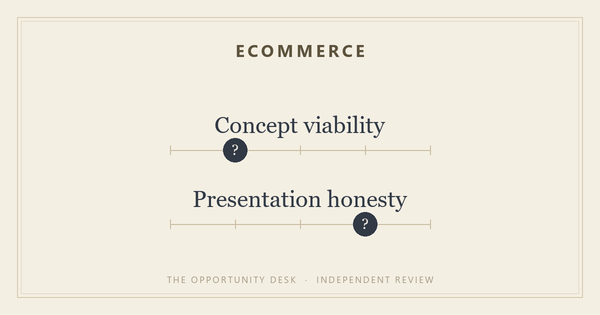
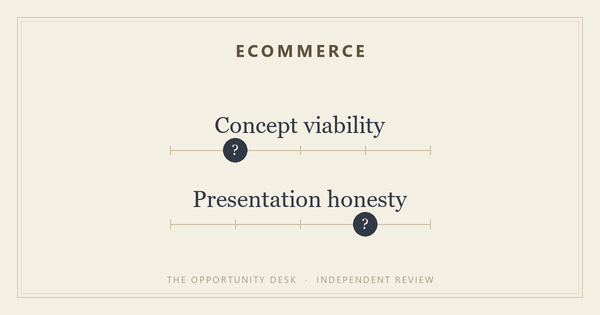
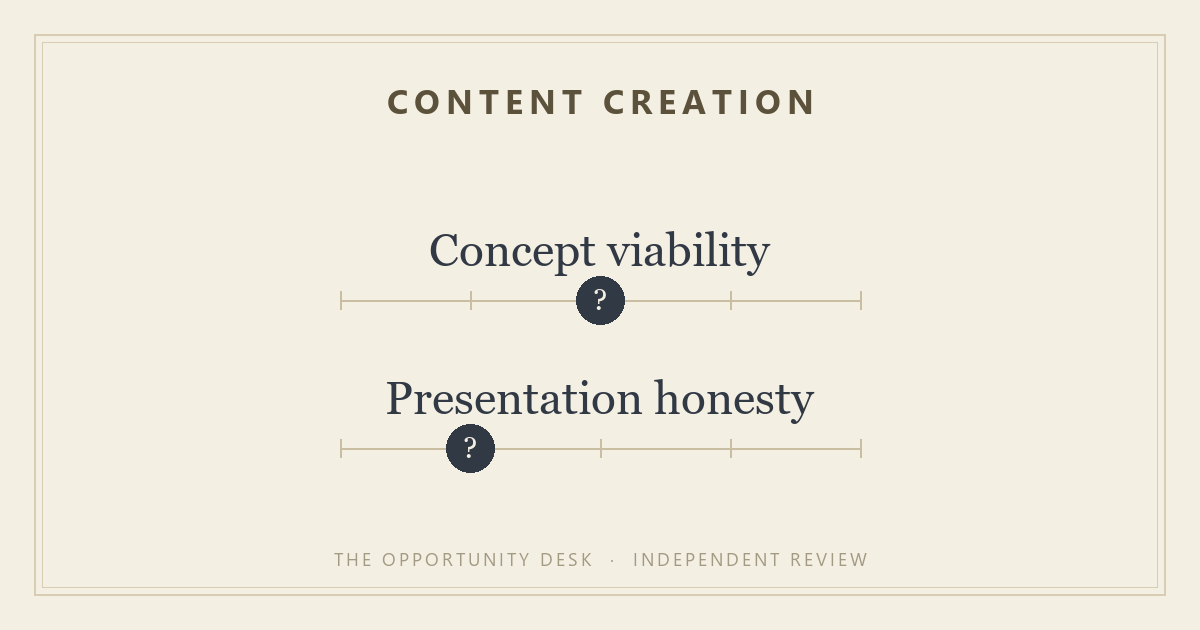
Concept Viability: 4/5
The underlying business model is legitimate. Faceless AI YouTube channels generating AdSense and affiliate revenue exist and they can scale. The tool stack described is legitimate and well-matched to the task.
Presentation Honesty: 3/5
More candid than most pitches in this category, the mistakes section and the algorithm realities are actually useful. Points lost for omitting the channel niche, understating the automation skill requirement, and presenting the digital product revenue as accessible before an audience exists.