Richard Yu's $32.7M Digital Products System
Richard Yu says he made $32.7 million selling other people's digital products via AI-built affiliate storefronts and faceless AI videos. The process is well known, but the income math is hypothetical and he never addresses Instagram's suppression of AI link-farming content.

Source: Richard Yu, I Made $32.7 Million Selling Simple Digital Products (Full Masterclass) [Watch on YouTube →]
THE OPPORTUNITY
Richard Yu says he made $32.7 million selling digital products and now runs a system where people earn commissions — sometimes 50% to 100% — by promoting other creators' ebooks, courses, and supplements using AI-generated content. He claims students can build income with no prior experience, no face-on-camera requirement, and minimal upfront cost by setting up affiliate websites and posting short AI videos to Instagram.
HOW IT'S EXECUTED
- Find existing digital products on affiliate marketplaces like Allen.store or ClickBank that pay high commissions (50-100% or more), grab your unique affiliate link for tracking.
- Build a professional-looking storefront website in under 60 seconds using Wix's AI site builder, embedding your affiliate links as product pages.
- Identify high-performing Instagram videos in your chosen niche (health, wealth, relationships) and extract their scripts using Allen AI's transcript tool.
- Generate AI avatar videos using HeyGen by uploading a reference face image and pasting in either the original script or a modified version.
- Post one or more AI-generated videos per day to Instagram, directing viewers to your link-in-bio storefront.
- Scale by posting more frequently or promoting higher-ticket products with larger commissions.
WHAT'S CREDIBLE
The underlying mechanics - affiliate marketing for digital products, high-commission structures are common in that space, and AI tools like HeyGen and Wix's builder do work as described. The student testimonials reference specific dollar figures and lifestyle outcomes, and Yu mentions being featured on a NASDAQ billboard, which is a verifiable public claim. The basic arbitrage model - finding proven products, using AI to automate content creation, and earning commissions without inventory or fulfillment - is a legitimate business structure that predates AI.
WHAT'S OMITTED OR OVERSTATED
He never discloses how much his own $32.7 million came from selling digital products versus selling courses and coaching to students. That distinction really matters. If most of his revenue came from teaching this system rather than executing it, the pitch is fundamentally different.
The student success stories lack context. Priscilla's $200,000 is presented as total sales. He does not clarify whether that figure is gross revenue or net profit after ad spend, refunds, and platform fees. The timeframe is vague. "In the last year" could mean steady monthly income or one outlier period followed by nothing.
Sean's $250,000 figure is described as "cash" and "mine," implying net profit. But there is no breakdown of expenses. If he spent $100,000 on ads or courses to generate that $250,000, the actual margin is far narrower than the pitch suggests.
The video's math is hypothetical and optimistic. He assumes 1% click-through from views to website and 5% conversion from visitors to buyers. Those numbers are presented without supporting data. Instagram's algorithm does not guarantee consistent reach. One viral video does not mean every subsequent post will perform the same way. New accounts often struggle to gain traction, and Instagram regularly throttles external link traffic.
He claims some supplements pay 300% commissions because of lifetime value. That structure exists but is rare and typically reserved for subscription products with proven retention. Most affiliate programs in health and wellness pay 10-30%, not triple the sale price. The 300% example is an outlier being presented as normal.
The Wix "scholarship" is marketing language for an affiliate deal. Wix is not covering $997 in tuition out of altruism. Yu earns a commission when someone signs up for Wix through his link. The "free course" is contingent on attending a 90-minute webinar, a standard sales funnel designed to upsell into a paid mentorship program. The $997 course is positioned as free, but the condition is paying Wix $19-36/month, meaning the first month's cost is the real buy-in.
He says you can cancel Wix after 30 days and keep the course. That may be true, but the webinar attendance requirement and email verification process create friction. People who sign up and then cancel before the webinar may not receive access. The terms are vague enough to allow wiggle room.
The AI avatar accounts he shows - Yangmong and Susan Miller - are real examples of faceless content. But he does not disclose whether those accounts are his, his students', or unrelated third parties he is using as case studies without permission. If they are his accounts, he should say so. If they are not, using someone else's business as proof of his system's effectiveness is misleading.
Instagram's policies explicitly restrict certain types of AI-generated content and affiliate marketing practices. Accounts that post repetitive AI content with heavy commercial intent are often shadowbanned or flagged. He does not mention compliance risks or platform volatility.
The "one video per day" model assumes zero competition and infinite demand. If thousands of people follow this exact system in the same niches, the Instagram feed saturates with similar AI-generated content. Differentiation becomes harder, and the arbitrage advantage disappears.
He frames this as requiring no expertise, no experience, and minimal time. But setting up affiliate accounts, navigating platform policies, creating compliant landing pages, and optimizing conversion rates all require learning. Calling this "semi-autopilot" understates the ongoing work involved.
The $32.7 million claim is never tied to a specific timeframe. "Back in 2019" suggests he has been in business for five years. If that $32.7 million is cumulative over five years, it averages to about $6.5 million per year - still very substantial but far less dramatic than the standalone figure implies. If most of that came from a single outlier year, or if it includes revenue from his coaching business rather than just affiliate commissions, the claim is inflated.
He mentions Allen.store and Digistore24 as curated marketplaces. He does not disclose whether he has a financial relationship with those platforms. If he earns referral fees when students sign up, that is a material conflict of interest.
The testimonial video clips are edited and lack verifiable context. Priscilla and Sean may be real students, but short soundbites do not show how much they spent to achieve those results, how many others in the same program did not succeed, or whether their outcomes are representative. Survivorship bias is built into this kind of case study marketing.
He says profit margins are 90%+ because there are no employees or hard costs. That ignores the cost of tools (HeyGen, Allen AI, Wix subscriptions), potential ad spend to scale traffic, and the time cost of content creation and optimization. Even if the tools are cheap, calling this a 90% margin business is an overstatement unless you value your own labor at zero.
BOTTOM LINE
This is a real business model wrapped in aggressive funnel marketing. The mechanics work - affiliate commissions exist, AI tools can generate content, and faceless Instagram accounts can drive traffic. But the pitch inflates ease, understates competition and platform risk, and buries the fact that Yu's own income likely comes from selling access to this system rather than executing it at scale. This is viable for someone willing to learn affiliate marketing fundamentals, test and optimize relentlessly, and accept that most attempts will not hit the income levels shown in the testimonials. It is not viable for someone expecting passive income or assuming that posting AI videos automatically generates sales.
OPPORTUNITY DESK RATING
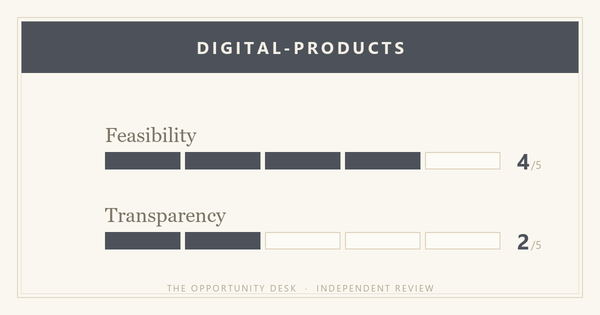
Feasibility: 3/5 — The underlying affiliate arbitrage model is sound, the tools exist and function as described, and faceless content strategies do work. But the pitch skips over platform volatility, saturation risk, and the learning curve required to convert traffic into actual sales.
Transparency: 2/5 — Yu never discloses how much of his $32.7 million came from coaching versus affiliate commissions, never clarifies whether student results are gross or net, never mentions his financial relationships with the platforms he promotes, and frames a standard affiliate webinar funnel as a corporate scholarship.