Wholesale Ted: NEW AI Side Hustle Ideas That Everyone Is Ignoring
Sarah pitches five AI side hustles - all built on real tools. Every example she shows already has traffic (her own audience, or stores that built distribution over years), and she never prices in what it costs to get discovered from zero.
Source: "NEW AI Side Hustle Ideas That Everyone Is Ignoring" — Wholesale Ted, published June 2026. Watch on YouTube →
THE OPPORTUNITY
Sarah from Wholesale Ted presents five AI side hustles: self-publishing motivational kids books on Amazon, selling AI-designed woven blankets through print-on-demand, offering AI book services on Fiverr, running a coloring channel that promotes AI-generated coloring books, and building niche affiliate review websites with AI coding tools. She claims these are being ignored while everyone chases "trendy AI tools."
HOW IT'S EXECUTED
- Use Claude to identify underserved demographics in the kids book market, then generate 1,200-1,400 word stories using the Sonnet model and polish them with Opus.
- Create consistent character illustrations with Google's image model (Nano Banana) through their Flow interface, then design the book layout in Canva with frames and text boxes before exporting as a PDF.
- Upload the finished book file to Amazon KDP, which handles printing and shipping while you collect royalties on each sale.
- For woven blankets, generate rectangular images with the same AI image model, upscale them to 18,000 by 24,000 pixels using A1D, then upload to Printify and list on Etsy or eBay.
- For affiliate review sites, use Base44 or similar AI coding tools to generate a full website by describing your niche, then swap in Claude-written content and launch with a $1 domain through the platform's hosting.
WHAT'S CREDIBLE
The kids book market growth is real. Social-emotional learning products have expanded significantly. The example books Sarah shows do exist and have public sales ranks. Amazon's KDP calculator is legitimate. The print-on-demand workflow through Printify is accurate. The tools she names are real and do perform the functions she describes. The affiliate commission structures she cites match how Amazon Associates and individual merchant programs actually work.
WHAT'S OMITTED OR OVERSTATED
Sarah bases her entire kids book profit calculation on a sales estimator that produces a range, not verified income. She uses the high end of that range. She never mentions whether this creator runs paid ads. The $6.62 profit margin assumes a specific list price and production cost that may not match what a beginner would achieve. She doesn't address how long it took this creator to publish enough books to reach that volume. Most importantly, she never mentions that the creator she profiles likely published these books before the market got saturated with AI-generated content.
She calls the social-emotional learning market "set to quadruple within the next 9 years" but provides no source. That's a specific forecast being presented as fact with no attribution. The Claude market research she demonstrates is just prompting an LLM to suggest niches. There's no actual search volume data, no competitive analysis tools, no verification that ADHD kids books are actually low-competition. She searched Amazon manually and found "only two." That's not market research, that's browsing.
The woven blanket profit margins look spectacular until you consider traffic. She shows Etsy stores with thousands of sales but never addresses how those stores got discovered. Etsy search is competitive. Most new stores don't get organic traffic without running ads. She doesn't mention ad costs. She doesn't explain how to price competitively while maintaining an $80-140 markup on a $21-45 base cost when established sellers are already in that space.
For the coloring channel, she assumes you can build an audience filming yourself coloring pages. She doesn't mention that the channels she shows have been posting for months or years to build that reach. Starting from zero followers means no traffic to your Shopify store. She mentions Shopify costs $1 to set up, which is a promotional trial rate, not the ongoing monthly fee.
The affiliate website idea skips the hardest part entirely. Getting a new site to rank in Google takes months of consistent content and backlinks. She treats "low competition" as if it means instant rankings. It doesn't. She codes a demo site in minutes but never shows it indexed or ranking for anything. She never mentions that Google's helpful content update has specifically targeted AI-generated affiliate content. Many sites built exactly this way have been deindexed.
She's a YouTuber with an existing audience. When she says "I earn affiliate commissions every day," that's from embedding links in videos that get hundreds of thousands of views. A reader starting from scratch has no traffic source. She's skipping over the entire distribution problem.
BOTTOM LINE
These are real workflows, but Sarah is selling the execution tools without addressing the distribution problem. Every idea hinges on getting traffic - Amazon search rankings, Etsy discoverability, Google indexing, or social media reach - and she treats that as automatic. It's not. Someone could follow every technical step here and sell nothing because they have no audience and no ad budget. This is viable for someone who already has traffic or is willing to spend months building it. For everyone else, these are functional templates with no customers attached.
OPPORTUNITY DESK RATING
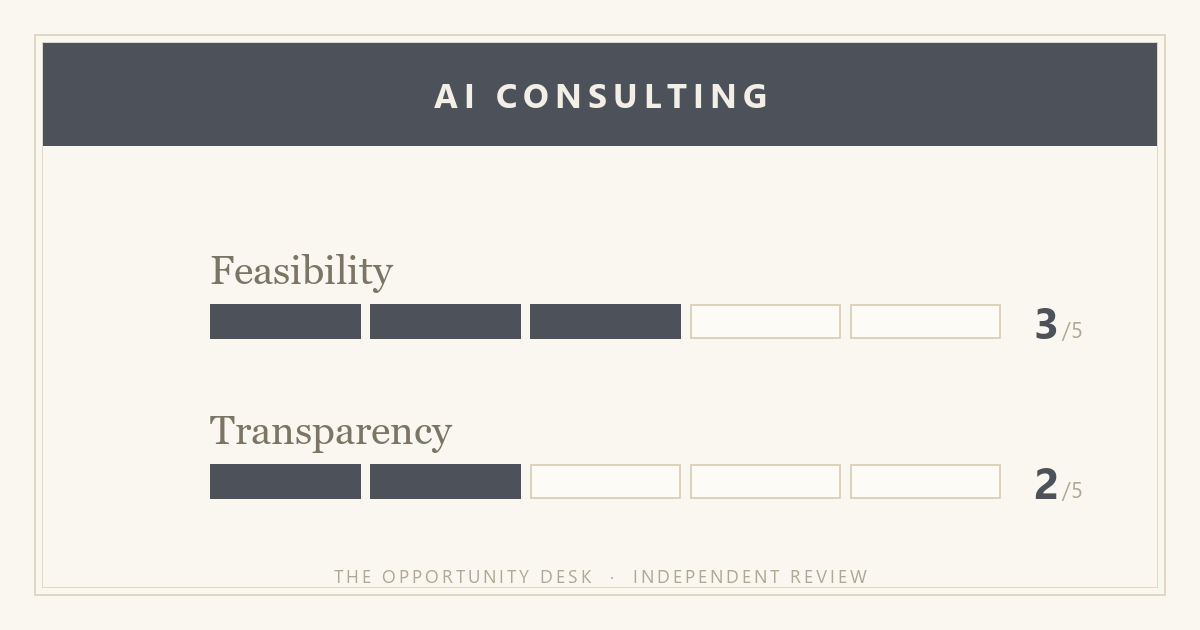
Feasibility: 3/5 — The tools work as described and the markets exist, but the path from "publish a book" or "launch a site" to "make sales" is much harder than Sarah presents, especially in categories now flooded with AI content.
Transparency: 2/5 — She shows real examples but bases profit claims on the optimistic end of estimator ranges, skips ad costs entirely, and presents her own affiliate income as if it's replicable without mentioning she has a large existing audience.