Wendy Nolan's MRR Pitch: The Easiest Digital Side Hustle After 50?
Wendy Nolan's master resell rights pitch promising 100% profit on an $800 digital marketing course, backed by a $123,000-in-80-days income claim. What's missing is how a newcomer actually gets people to see the funnel.
Source: Wendy Nolan, Easiet Digital Side Hustle to Start After 50 [Watch on YouTube →]
THE OPPORTUNITY
This is effectively the same pitch by Wendy Nolan that we previously reviewed here. Nolan is promoting a master resell rights (MRR) digital education program focused on digital marketing. The pitch: purchase access to an online course for roughly $800, learn digital marketing skills, and immediately resell that same course for 100% profit while automated systems handle the sales process.
HOW IT'S EXECUTED
- You buy into a done-for-you MRR program that provides pre-built sales funnels, capture pages, email sequences, and digital marketing training.
- The system runs on platform infrastructure (she mentions systeme.io for email automation) that handles lead capture, follow-up sequences, and payment processing.
- You drive traffic to these automated funnels through organic content or paid ads — though Nolan doesn't specify her traffic sources in this video.
The business model combines self-education with immediate resale rights, positioning the purchase as both learning investment and business license. She emphasizes that you're selling educational content to people already searching for "make money online" solutions, relying on the proven search volume in that niche.
WHAT'S CREDIBLE
The underlying MRR business model is real and has been around for years in various forms. Digital products have attractive economics: no inventory, no shipping, high margins. The pain points Nolan identifies are genuine — affiliate marketing does cap your earnings, creating products from scratch without market validation is risky, and automated email sequences do improve conversion rates over manual follow-up. Her progression from failed attempts to finding something that worked follows a pattern many entrepreneurs experience. The comparison to traditional education costs has merit. Conventional marketing courses can run $2,000+ with no built-in monetization path.
WHAT'S OMITTED OR OVERSTATED
The income figures deserve serious scrutiny. Nolan shows $123,000 in 80 days but provides no context about her existing audience size, ad spend, or how much of that revenue represents her own course sales versus affiliate commissions from other products she mentions. She built this on top of an already-established platform and following. She's not starting from the same position as her viewer. The "from your phone" framing is misleading; building these systems requires considerable computer-based setup work, even if you can monitor sales on mobile.
The traffic generation gap is the most critical omission. She never explains how someone gets people to see the funnel. This isn't a small detail, it's the entire business. Without addressing whether you'll need to spend thousands on Facebook ads, build a social media following over months, or learn SEO, the "easy" claim fades quickly. The done-for-you system handles the sales process, but it doesn't handle customer acquisition, which is where most people actually fail.
Her narrative implies the MRR program itself generated the $123,000, but she mentions "over 20-some different income streams" and multiple digital products she's created since. The income figure likely represents her entire business ecosystem, not just the entry-level program she's recommending. That's a significant potential misrepresentation of what a newcomer should expect.
The "research" section glosses over the most important question: if everyone in this program is selling the identical product to the same "make money online" audience, you're competing directly with every other student. She positions high search volume as opportunity but doesn't acknowledge the saturated competition in that space.
BOTTOM LINE
This is viable for someone who already has an audience, is comfortable on camera or creating written content consistently, and has either money for paid traffic or patience for organic growth. The MRR model works, and people do make money with it, but success depends entirely on your ability to generate attention — which requires either capital, time, or a pre-existing platform. If you're starting at zero followers and don't know how to build an audience, the "easy" and "from your phone" promises are oversold. The education component has legitimate value if you want to learn digital marketing skills, but understand you're buying training first and a business opportunity second.
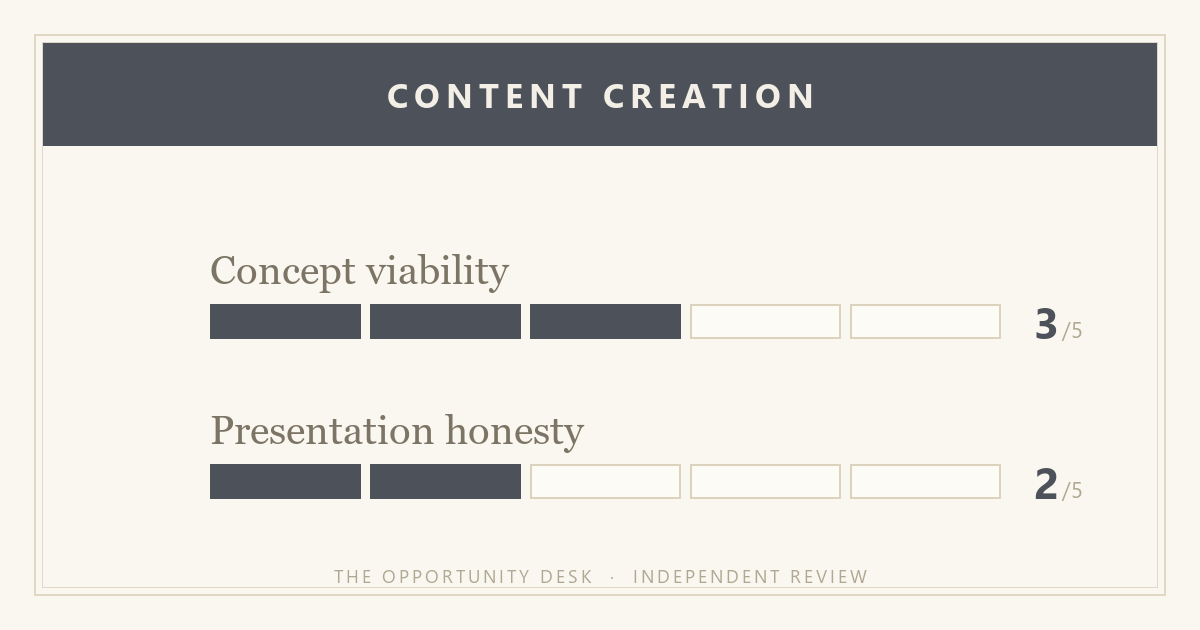
OPPORTUNITY DESK RATING
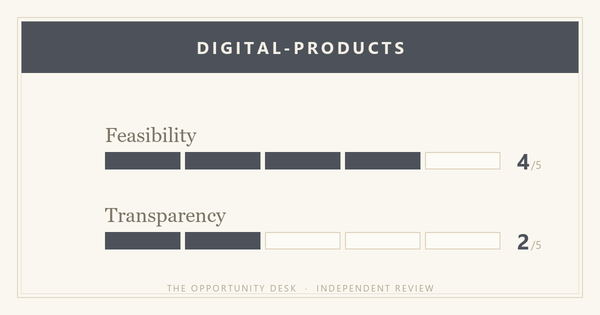
Concept Viability: 3/5
The MRR model is sound and digital products have excellent unit economics, but the market for "make money online" education is intensely competitive, and the pitch omits the most difficult part — traffic generation.
Presentation Honesty: 2/5
While Nolan shares genuine failures and acknowledges her learning curve, the income claims lack necessary context about ad spend and existing platform advantages, and the "easy" framing deliberately minimizes the hardest part of the business: getting people to see your offer.