Tim Richard, This 'One-Product' Website Makes $600,000 per month
Tim Richard says eight e-commerce brands — including a $600K/month pillow business and a $100M waterproof shoe brand — were built on low-competition keyword targeting. His revenue figures are largely unsourced estimates, and the capital and SEO timeline the strategy requires go unaddressed.

Source: "This 'One-Product' Website Makes $600,000/Month" — Tim Richard, published April 2026. Watch on YouTube →
THE OPPORTUNITY
Tim Richard profiles eight single-product websites that he says collectively generate tens of millions in annual revenue by targeting low-competition search terms. The pitch: find a niche keyword with search volume but few competitors, build a simple product around that term, and rank organically without major ad spend. He cites examples like a cube pillow company he estimates does $600,000 monthly and a waterproof shoe brand he says brings in $100 million yearly.
HOW IT'S EXECUTED
- Use keyword research tools to find search terms with volume above 1,000 monthly but difficulty scores below 15 on a 100-point scale.
- Identify a product category where established brands exist but no one has built a site optimized for that specific search phrase.
- Source or develop a product that directly answers the search query.
- Build a content-optimized website targeting those exact keywords in product descriptions and supporting blog content.
- Supplement organic ranking with influencer outreach or platform content where the product demonstrates visually.
- Scale by adding product variants that target adjacent low-competition keywords in the same niche.
WHAT'S CREDIBLE
The underlying premise holds. Low-competition keywords with significant search volume exist. Building a brand around a specific use case rather than trying to compete with Amazon or Nike makes sense. The profiled businesses are real. Pillow Cube and Vessi have verifiable track records. The keyword difficulty scores Richards shows are pulled from Ahrefs, a legitimate SEO tool. The logic that a focused brand can win influencer mentions more easily than a generic competitor is sound.
WHAT'S OMITTED OR OVERSTATED
Richard estimates Pillow Cube does $600,000 monthly based on traffic data alone. He never explains his conversion rate assumptions or average order value. Without those inputs, the figure is guesswork. He says Big Barker did "over $30 million" but cites no source or time frame. That could mean lifetime revenue or a single year. He claims King Kong does $80,000 monthly but again bases this on traffic and "a conservative conversion rate" he never specifies. Conversion rates vary wildly by category and price point.
He presents keyword difficulty scores as if they are static. Difficulty rises as more people discover the same opportunity. If a niche is genuinely profitable, competitors will enter. He never addresses how long these low-difficulty windows actually stay open. He shows search volume for terms like "waterproof shoes for men" at 7,800 monthly. That volume is spread across everyone ranking for that term. Ranking second or third does not deliver all 7,800 visitors. He never provides click-through rate data for those positions.
He says The Nutter sold 100,000 units at $189 each but never mentions product cost, return rates, or paid acquisition spend. A company can do $18 million in gross sales and still be unprofitable if margins are thin and return rates are high. He mentions The Nutter got traction on TikTok and Instagram but never says whether that was paid or organic reach. Organic social reach has collapsed on most platforms. If they paid for distribution, that changes the math.
He states Vessi does over $100 million yearly. He does not say whether this is revenue or profit. He does not say how much Vessi spent on product development or marketing to reach that scale. Waterproof shoe technology requires materials engineering. That is not a dropshipped product you can launch with $5,000. He never mentions the capital required to develop any of these products. Pillow Cube needed foam sourcing and manufacturing. Big Barker needed orthopedic materials. Mind Journal needed print production. Even a journal costs money to prototype and print at scale.
He says Big Barker got thousands of reviews on Amazon. He never says whether those came from verified purchases or how much the brand spent on Amazon advertising to get that early traction. He claims Big Fig did $2 million from referrals last year. He does not say how much they paid affiliates to generate those referrals or whether that $2 million is gross revenue or profit after commission payouts. He never addresses the role of paid search in any of these businesses. A brand can rank organically and still spend heavily on Google Ads to capture bottom-funnel keywords.
He says he "personally made all of my money going after low competition markets" but never discloses which businesses he has run or what that money actually amounts to. He pitches his "idea book" with over 800 product opportunities. If those opportunities are genuinely profitable and low-competition, publishing them in a paid guide destroys the low-competition advantage for anyone who buys it. He frames this as analysis but he is selling a product. That creates an incentive to overstate the ease of execution.
BOTTOM LINE
This works if you have capital to develop a differentiated product, time to build content and backlinks, and either SEO expertise or budget to hire it. The underlying logic is sound. The revenue figures are unverified and the profit margins are never discussed. Most of these brands likely spent years and significant cash before they hit the numbers Richard cites. If you can handle a two-year runway and five-figure upfront costs, this is a real path. If you think you can rank a Shopify store in 90 days with no budget, you will lose money.
OPPORTUNITY DESK RATING
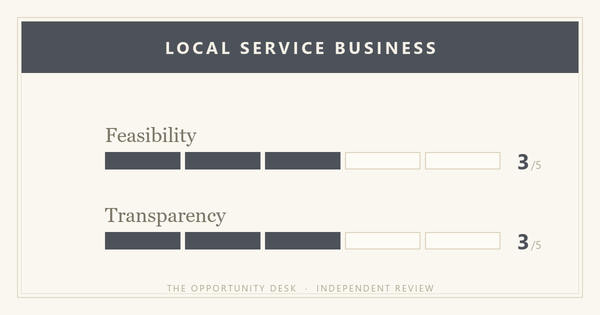
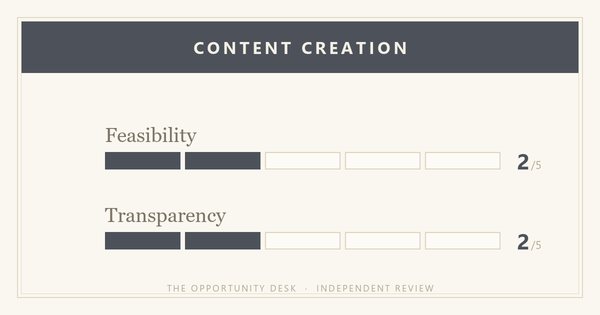
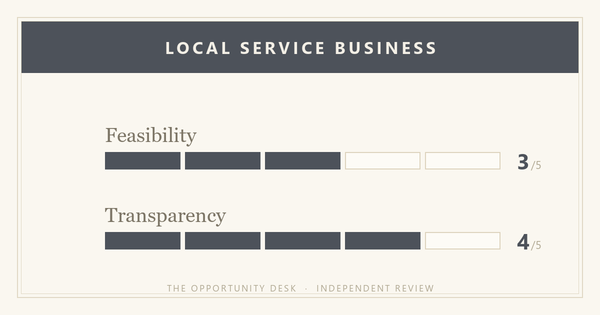
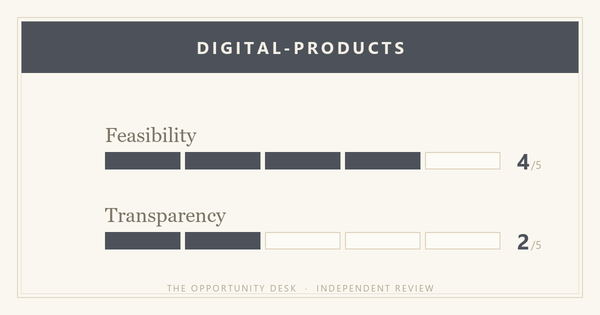
Feasibility: 3/5 — The strategy works but requires more capital and expertise than Richard implies. Building a product, ranking content, and converting traffic are each hard problems on their own.
Transparency: 2/5 — Revenue estimates are presented as fact without methodology. Costs, timelines, and profit margins are entirely absent. The fact that he is selling an idea book while pitching these as accessible opportunities is never disclosed as a conflict.