Judd Albring's "After 50" Digital Products Pitch
Judd Albring pitches selling digital products to a niche audience over 50, built through free content and email funnels, with no inventory or shipping required. He cites nine years of experience but no revenue figures, leaving the actual income timeline for beginners unaddressed.
Source: "How To Create And Sell Digital Products (after 50)" — Judd Albring, published May 2026. Watch on YouTube →
THE OPPORTUNITY
Judd Albring pitches a digital product business model for people over 50: create downloadable guides, templates, or short video courses once, then sell them repeatedly through a sales funnel driven by free social media traffic. The pitch centers on low-tech execution. No inventory, no shipping, no advanced skills required beyond what you'd use to help a friend.
HOW IT'S EXECUTED
- Choose a focused niche where you know slightly more than your target buyer (example: "helping women over 50 lose weight without a gym" rather than generic weight loss advice).
- Create a simple digital product using free tools: a PDF guide in Google Docs or Canva, a template, or short videos filmed on your phone and uploaded as unlisted YouTube videos.
- Build a "freebie" (a one-page checklist or short guide) to offer in exchange for email addresses.
- Set up a sales funnel using system.io (the recommended platform) where strangers find your content, click a link to a landing page, download your freebie, and join your email list.
- Post consistent content on one social platform (YouTube, Facebook, Instagram, or TikTok) to drive traffic to your funnel. Post at least one YouTube video per week or three to four short-form videos daily.
- Email your list regularly (at least twice weekly) with helpful tips, building trust before introducing paid offers like coaching, courses, or premium guides.
WHAT'S CREDIBLE
The underlying mechanics work. Digital products do eliminate inventory and shipping overhead, and the sales funnel structure Albring describes - free content drives traffic to a lead magnet, email nurtures the relationship, offers convert a percentage - is standard direct-response marketing that predates the internet. His emphasis on starting with free traffic is prudent for beginners, and the "you only need to know a little more than your buyer" framing correctly identifies that expertise gaps can be narrow in many niches. The recommendation to focus on one platform rather than spreading effort across all of them is sensible for someone with limited time.
WHAT'S OMITTED OR OVERSTATED
The presentation never addresses how long it took Albring to reach meaningful income, what his monthly revenue actually looks like, or what percentage of people who follow this model earn enough to justify the time invested. "I've been doing this for nine years" is presented as a credential, but nine years is a long runway. If this is genuinely a beginner-friendly model, it would be helpful to know what year one looked like in dollars and hours. The Business Insider feature is mentioned without context: was it about his income success, his teaching, or something else entirely? A feature does not inherently validate earnings claims.
The claim that you can "start for free" is technically true but practically incomplete. While Google Docs and Canva's free tier cost nothing, system.io, the recommended all-in-one platform, offers a limited free plan but charges $27/month for the features most users would need (unlimited funnels, email automation beyond 2,000 contacts). That's not prohibitive, but it's also not "absolutely free" once you're operational. The paid traffic section mentions you can start at "$5 a day" without clarifying that $150/month in ad spend with no guaranteed return is a material risk for someone testing a new niche.
The niche examples are suspiciously aligned with what's currently trending on YouTube (retirement lifestyle channels, travel content for retirees, fitness after 50). This could mean Albring is accurately reading the market, or it could mean these niches are already crowded, making it harder for a newcomer to gain traction. He doesn't address competitive saturation or how to evaluate whether a niche still has room. The instruction to post "three times a day" for short-form video or "at least one video a week" for YouTube is presented as a requirement, not a range. That's 21 short videos or 52 long videos annually, which is a significant content production commitment that may not be realistic for someone who also has caregiving responsibilities or a day job.
BOTTOM LINE
This is viable for someone who already has a clear area of knowledge, comfort filming or writing regularly, and patience to build an audience over months or years without early income. The model works, but success depends on execution quality, niche selection, and sustained content output in a landscape where attention is expensive. If you're over 50, have a specific skill or life experience others would pay to shortcut, and can commit to weekly content creation for at least a year while earning little to nothing, this is a legitimate path. If you're looking for near-term income or lack a defined area of expertise, the gap between "start for free" and "replace your income" is much wider than this presentation suggests.
OPPORTUNITY DESK RATING
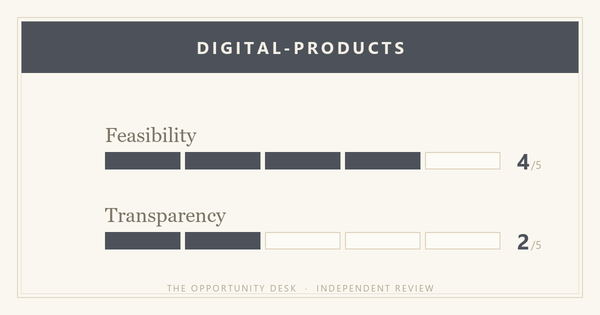
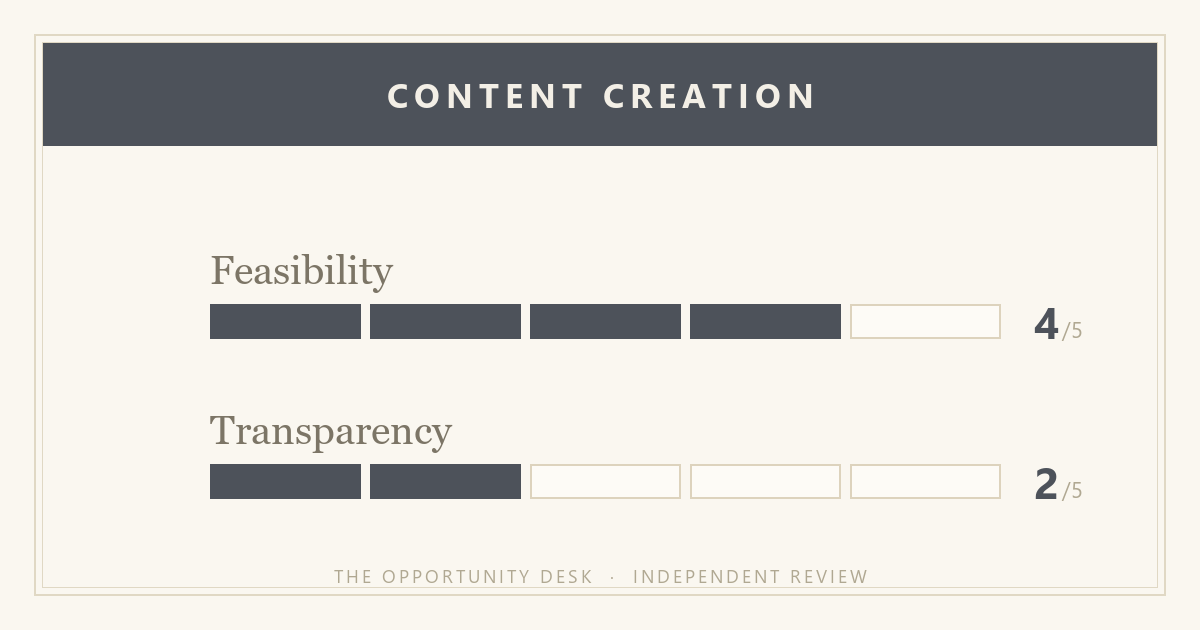
Concept Viability: 4/5
The business model is real. Digital products sold through email funnels have been profitable for thousands of creators, and the mechanics Albring describes are standard practice in the space.
Presentation Honesty: 2/5
Albring omits all income specifics, timeline expectations, and the practical costs of the recommended tools once you're past the initial setup, while framing the model as accessible "for free" in a way that obscures the actual resource commitment required.