Molly Keyser: How selling Ebooks with Claude changed my life (DON'T Sell on Amazon!)
A photography studio owner claims her $59 ebook generated over $500,000 with no paid ads and no pre-existing audience. The framework is sound. The "no pre-existing audience" part isn't quite true.
Source: "How selling Ebooks with Claude changed my life (DON'T Sell on Amazon!)" — Molly Keyser, published April 2026. Watch on YouTube →
THE OPPORTUNITY
Molly Keyser says she built a $500,000 revenue stream by selling a single $59 e-book to photographers, launched from an email list of 200 people, with no paid ads. She now teaches others to replicate that model - creating digital products, building an audience on YouTube, and selling through email - as a path to recurring income and location freedom.
HOW IT'S EXECUTED
- Pick a niche where you've solved a problem yourself or have teaching experience others would pay for.
- Post weekly educational videos on YouTube in that niche to grow an audience from zero.
- Create a free lead magnet (PDF guide, template, or short resource) that viewers download in exchange for their email address.
- Once you have 200 email subscribers, send a Google Forms survey asking what their biggest pain point is within your niche.
- Build a checkout page for a digital product that solves that pain point and pre-sell it with a delivery date two to four weeks out.
If people buy during the pre-sale, create the product before the deadline. If not, repeat the survey and refine your offer until something sells.
WHAT'S CREDIBLE
The core mechanics - build an email list through free content, survey that list to find product-market fit, then pre-sell before you build, is standard validation strategy digital product sellers use. The emphasis on surveying before creating a product mirrors lean startup principles, and explains why her first product attempt failed, and her second succeeded. Her insistence on creating something that gets real results, not repackaged templates or Google-able information, aligns with sustainable product thinking. The trajectory from service provider burnout to scalable digital revenue is a common pattern in the creator economy.
WHAT'S OMITTED OR OVERSTATED
She says the e-book made over $500,000 in revenue but never states over what time period. A year would be extraordinary. Five years would be solid but far less dramatic. She says she made tens of thousands of dollars the first time she launched it, then that it went on to make $500,000 total, but there's no breakdown of what portion came from that initial launch versus sustained sales over time. She mentions no cost of goods, refund rate, or platform fees, so there's no way to know actual profit. She eventually sold the IP to another educator, which suggests the revenue stream was declining or she saw more value in the lump-sum sale than in continued sales, but she doesn't explain why she sold it or for how much.
She frames this as something anyone can do from scratch with no following. But she was already running one of the top-earning photography studios in the country and making multiple six figures a year before she started. That means she had years of domain expertise, a reputation in the photography community, and likely existing industry connections that gave her credibility the average beginner lacks. A photographer who already knew she was credible was asking for her advice is not the same as a random person starting a YouTube channel in a niche where they're unknown.
She says she started posting on YouTube and grew to over 100,000 subscribers but never says how long that took. Growing 100,000 subscribers in a year is wildly different from growing it in five. The timeline matters for anyone evaluating whether this is realistic on the side of a 9-to-5. She mentions she blocked off Fridays to focus on digital products but was already self-employed with control over her calendar. Someone working a traditional job has fundamentally less flexibility.
She says the e-book worked because it got people results and spread through word of mouth, not ads. But there's no detail on what "hundreds of testimonials" actually means in conversion terms. If 500 people bought it over five years, hundreds of testimonials would be a high percentage. If 10,000 people bought it, hundreds is a low percentage. She also doesn't address whether she gave the product away for testimonials early on or how she collected them.
She emphasizes pre-selling to validate demand before building. That's sound advice. But she skips over what happens if the product you pre-sell doesn't deliver on the promise. A 13-page PDF can be created in two weeks, but a more complex course or tool might take months. She doesn't address how to scope a product that's ambitious enough to command real money but simple enough to deliver on a short timeline after a pre-sale.
She says you can use free versions of ChatGPT, Claude, or Gemini to draft a freebie in minutes by training them on your voice. That's true for generating text. But training an AI well enough that the output sounds like you and not like generic AI slop takes more than minutes. It takes iteration, example transcripts, and editorial judgment. She presents it as a shortcut when it's more accurately a tool that still requires skill to use well.
She became a net worth millionaire at 30, maxes out her Roth IRA and 401(k) every year, and travels internationally one to two times a year. Those are real outcomes. But she doesn't break out how much of that wealth came from the e-book, how much from her photography business, how much from coaching others to sell digital products, and how much from YouTube ad revenue. The implication is that selling one e-book funded that lifestyle, but the actual revenue mix is never stated.
BOTTOM LINE
This is viable for someone who already has deep expertise in a specific niche, the discipline to produce weekly video content for months or years without immediate payoff, and the skill to create a product that actually solves a painful problem better than free alternatives. The validation method: survey, pre-sell, build, is sound. But the pitch undersells how much existing credibility and self-employment flexibility she already had before she started. Someone working a 9-to-5 with no domain reputation should expect a far longer runway to reach 200 engaged email subscribers than she had.
OPPORTUNITY DESK RATING
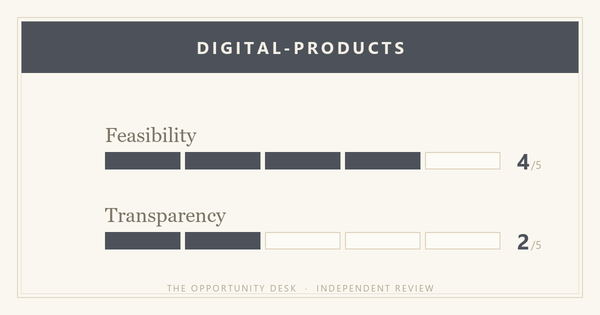
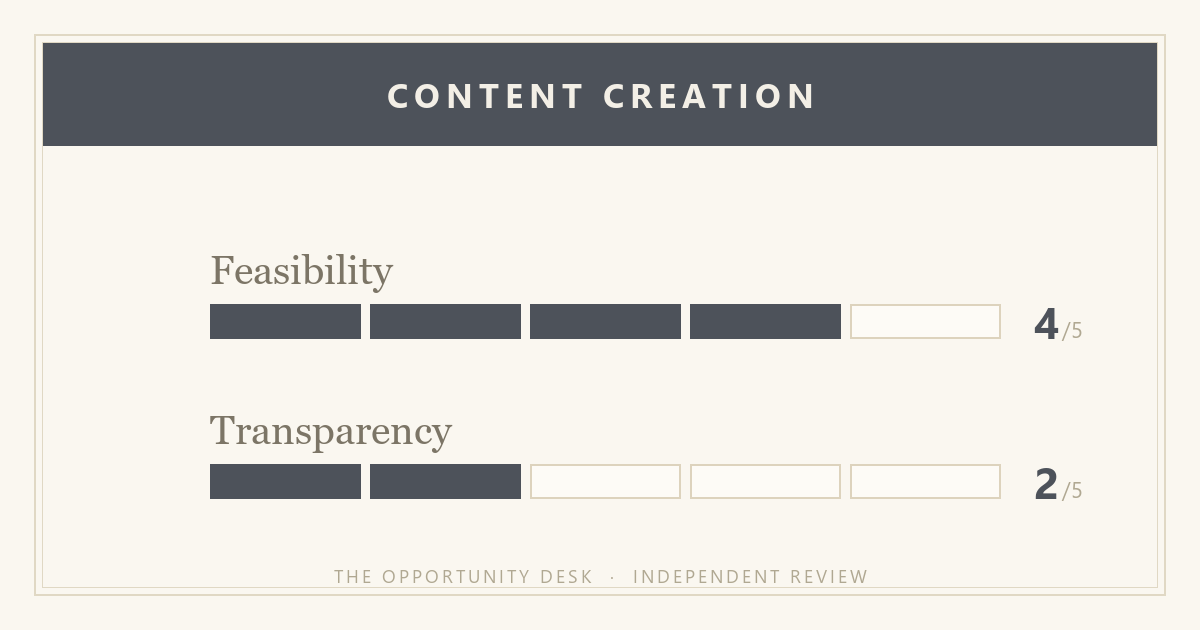
Feasibility: 4/5 — The underlying model: grow an audience, validate demand, sell a digital product, is legitimate and repeatable, but success depends heavily on pre-existing expertise and the ability to produce content consistently over a long period with no guaranteed return.
Transparency: 2/5 — Revenue figures are cited without time horizons, costs, or profit breakdowns. The head start she had from an already successful photography business is mentioned but minimized. Key variables like subscriber growth timelines and revenue sources are omitted entirely.