Side Hustle Nation, Guest Lou Shaver, He Makes $4,100/Month Inspecting Houses (No Experience Needed)
Lou Shaver says he makes $4,100 a month inspecting homes for construction lenders, no experience needed. But his own daughter's trial run — and the inspection background he doesn't mention — tell a different story about the real barrier to entry.
Source: "He Makes $4,100/Month Inspecting Houses (No Experience Needed)" — Side Hustle Nation, published July 2026. Watch on YouTube →
THE OPPORTUNITY
Lou Shaver earns around $4,100 a month inspecting houses under construction for banks issuing construction loans. He takes photos and fills out checklists verifying that work has been completed before the lender releases the next payment to the builder. He says he works about 91 hours a month doing this.
HOW IT'S EXECUTED
- Sign up with loan inspection marketplaces like Nationwide Loan Inspectors, Built, or Raise that connect inspectors with banks issuing construction loans.
- Accept inspection requests through email or app notifications, typically requiring completion within 24-48 hours.
- Contact the builder to schedule access to the construction site (most inspections don't require the builder to be present).
- Visit the site with a smartphone, following the bank's checklist to photograph specific construction phases (foundation, framing, electrical rough-in, etc.).
- Use location-tracking apps to verify you're at the correct property and enable GPS metadata in photos to prove your location.
- Upload photos and complete the inspection report through the platform's website or app while on-site or shortly after.
- Receive payment automatically from the platform, either weekly, bi-weekly, or monthly depending on the service.
WHAT'S CREDIBLE
Lou provides specific numbers and operational details that track consistently throughout the interview. His description of the work matches the mechanics of construction lending: banks issue loans in draws - tied to completion milestones. Third-party verification is standard practice. The hourly math works. 25-30 minutes per site at $60-75 per inspection, working 91 hours monthly, falls in the range he claims. His mention of getting locked on a back porch and needing the homeowner to return suggests actual field experience rather than hypothetical scenarios.
WHAT'S OMITTED OR OVERSTATED
Lou retired from military service in 2012 and worked as an inspector for the Naval Inspector General before starting this. That's twelve years of inspection experience that the average viewer lacks. The host frames this as requiring "no experience," but Lou's daughter, the example of someone with zero background succeeding, made $1,200 over six weeks with direct mentoring from her father. That's $200 a week, not the $1,000+ monthly Lou averages, and it required sustained coaching from someone already established in the business.
Lou mentions working with inspection marketplaces but says some require "a couple years of experience" or a referral from an existing inspector to get accepted. He doesn't specify which platforms have these requirements versus which accept complete beginners. Without knowing which marketplaces are actually accessible to newcomers, the barrier to entry is unclear.
The $4,100 monthly average is presented without a time range or sample size. This could be one exceptional month or a sustained twelve-month average. The difference matters significantly for someone evaluating whether this income is achievable.
Lou says "this thing is doubled the first year and now it's going to double again this year." If he started in 2023 and is averaging $4,100 now in 2024 or 2025, the initial monthly income was around $1,000-$2,000. That matches his stated goal of $1,200-$1,500, not evidence of explosive growth available to everyone.
The $972 in monthly expenses includes $780 in gas for 200 miles of driving daily. At current fuel prices and average vehicle efficiency, that suggests extremely low miles-per-gallon or inflated mileage. Driving 200 miles per day for 91 hours per month works out to roughly 10-12 working days monthly, which is plausible. But the gas expense of $26 per day seems high unless fuel prices in his area are extreme or his vehicle is exceptionally inefficient.
Lou works in a mountainous area of North Carolina where construction is active but scattered. Someone in a flat suburban market with subdivisions going up simultaneously could handle more inspections per day with less drive time. Someone in a rural area with minimal construction would struggle to find work at all. Geography matters, and Lou doesn't address how much of his success depends on being in a specific type of market.
Lou mentions he's now creating a training program at drawinspectortraining.com. This shifts the pitch from "here's how I make money" to "here's what I'm selling to help you make money." That doesn't invalidate his operational claims, but it does mean his primary revenue may be shifting toward course sales rather than inspections.
He says banks want inspections completed within 24-48 hours. That requirement makes this difficult to execute as a true part-time gig for someone working a standard Monday-Friday schedule. If inspection requests arrive randomly throughout the week, a 9-to-5 worker would need flexible lunch breaks or the ability to leave work mid-day, which many employers don't allow.
Lou mentions liability insurance but says he "probably should" get errors and omissions coverage. If he's operating without E&O after two years, that suggests either the risk is minimal or he's underinsured. Either way, anyone entering this field should verify what coverage is actually necessary rather than following Lou's "probably fine" approach.
The short-term rental inspection work is presented as an additional revenue stream, but Lou admits he "underpriced" his first client and it was taking significantly longer than expected. This side-of-a-side-hustle feels exploratory rather than proven, yet it's positioned as another viable path.
BOTTOM LINE
This works if you live in an area with sustained residential construction, can respond to inspection requests within 24-48 hours, and are comfortable driving 100-200 miles on inspection days. Lou's military and Naval Inspector General background gave him credibility when approaching platforms and builders that someone with zero inspection history would lack. The income is real but depends heavily on market density, how many inspection companies accept you, and whether you can build reputation quickly enough to become a preferred provider. This is a better fit for someone with flexible daytime availability than someone working a standard full-time job.
OPPORTUNITY DESK RATING
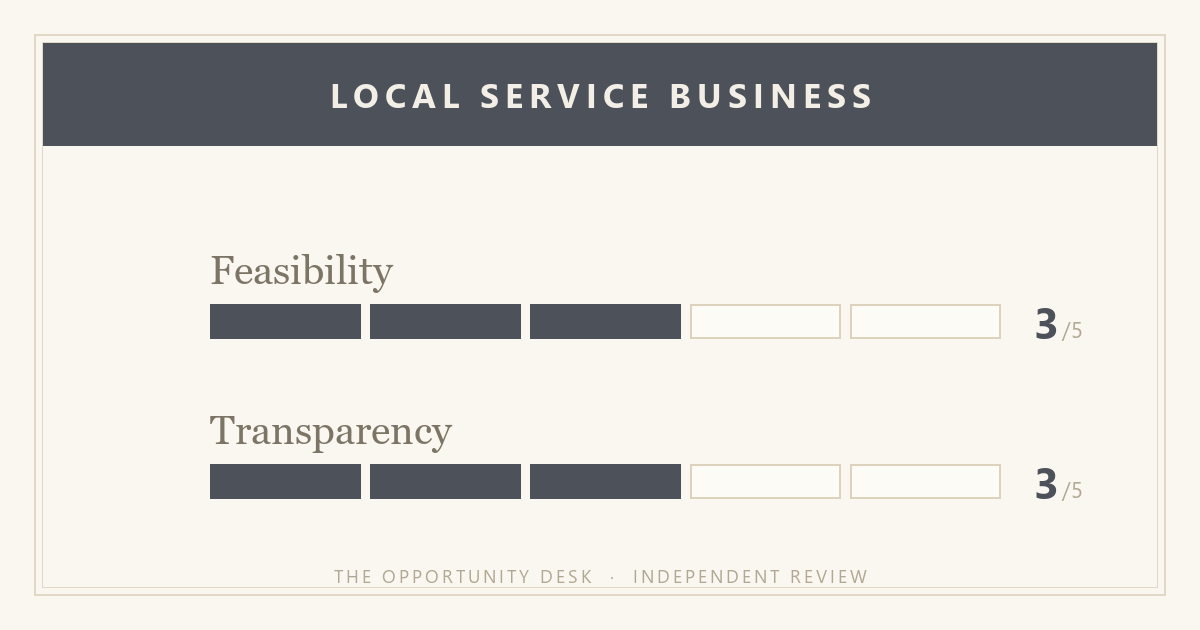
Feasibility: 3/5 — The underlying work exists and pays what Lou claims, but access depends on being accepted by inspection platforms, living in an active construction market, and having flexible availability during business hours to meet 24-48 hour turnaround requirements.
Transparency: 3/5 — Lou provides useful operational detail and doesn't hide costs, but he omits his prior inspection experience when claiming "no experience needed," doesn't specify which platforms accept beginners versus require referrals, and presents income figures without time ranges or context about how long it took to reach that level.