Isabella Kotsias, Baddie In Business, How to Start Selling Digital Products with Claude AI
A guide to building & selling AI-generated ebooks through Shopify implies income with minimal startup cost. The process can work. The income claim comes from someone whose actual income may be from other sources — not the ebooks themselves.

Source: "How to Start Selling Digital Products with CLAUDE AI (STEP BY STEP)" — Baddie In Business, published June 2026. Watch on YouTube →
THE OPPORTUNITY
Isabella Kotsias walks viewers through setting up a digital product store using AI tools - specifically Claude for writing ebooks and a Shopify plugin called Instastore.ai for building the storefront. She says people including herself are making thousands monthly selling these products, and positions this as a side hustle that requires little money or time to start.
HOW IT'S EXECUTED
- Sign up for Shopify through Instastore.ai (first three months at $1/month), choose a niche, and let the plugin generate a basic storefront.
- Use Claude to brainstorm ebook ideas, then prompt it to write a complete guide on a specific topic with actionable steps and checklists.
- Copy Claude's output into Canva, edit it for clarity and value, design it using free ebook templates, and export as PDF.
- Upload the PDF to your Shopify store, write a product description focused on the problem it solves, and price it between $9–$27.
- Market the product organically on Threads, Instagram, or other platforms using free content (she mentions a tool called Trend Sizzling AI for generating posts).
- Reinvest time in growing your social accounts and building additional digital products.
WHAT'S CREDIBLE
The core mechanics work. You can create an ebook with AI, sell it through Shopify, and drive traffic through social media without upfront capital. Shopify does offer promotional pricing for new stores. The general workflow - brainstorm with AI, design in Canva, upload to an ecommerce platform - is how many digital product sellers operate. Her emphasis on solving emotional problems rather than selling generic information is a legitimate strategy.
WHAT'S OMITTED OR OVERSTATED
She says she became a millionaire in two years using these strategies. She does not specify whether that revenue came from digital products, courses teaching digital products, affiliate income from tools she promotes, or some combination.
The video itself is monetized through affiliate links for Shopify, the .store domain registrar, and Trend Sizzling AI. That creates an incentive structure where her income may depend more on teaching this model than executing it.
She never shows her own store's sales dashboard or provides a timeframe for the "thousands of dollars every single month" claim.
She does not address Shopify's transaction fees beyond the $1/month promotional rate (standard plans run $29–$299/month after three months, plus payment processing fees of roughly 2.9% plus 30 cents per transaction). She does not mention the cost of Trend Sizzling AI, which she recommends for marketing. The .store domain promotion she links to is an affiliate arrangement.
She glosses over the difficulty of organic social media growth. She says "brand new creators" are blowing up on Threads but provides no data on typical growth rates or conversion rates from free posts to sales. She does not address how saturated the beginner finance niche is or what makes a $9–$27 ebook competitive against free content.
She frames this as a 15-30 minute setup but does not account for the time required to learn marketing, produce consistent content, or iterate on products that do not sell. She does not mention refund rates, customer service time, or the reality that most Shopify stores generate zero revenue. Her claim that setting up takes "less than 15 minutes" conflicts with her own tutorial, which runs over 18 minutes and skips the actual marketing execution entirely.
BOTTOM LINE
This is a legitimate business model for someone willing to treat it as a long-term content marketing project, not a quick side hustle. If you already have a social media following, experience writing persuasive copy, or expertise in a niche people will pay to learn about, the technical barriers are low. If you are starting from zero and hoping AI will do the hard parts for you, the gap between setup and revenue is much wider than this video suggests.
OPPORTUNITY DESK RATING
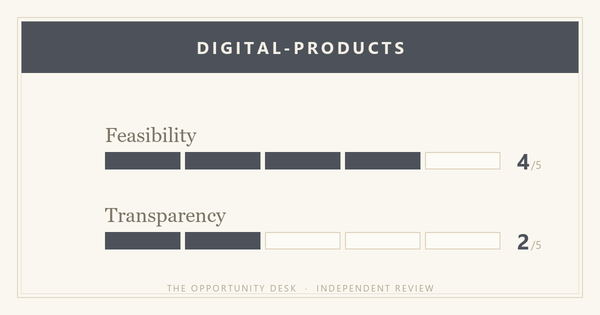
Feasibility: 3/5 — The underlying business (selling digital products through Shopify) is real, but the path from setup to revenue is far longer and harder than presented, and most attempts will fail to gain traction.
Transparency: 2/5 — She discloses affiliate links but does not separate her own revenue sources, provide verified income data, or acknowledge the time and skill required to succeed at organic marketing.