Hannah Gardner: We Made 3 High Priced Etsy Digital Downloads Using Claude (This is nuts)
Hannah Gardner demonstrates building high-priced Etsy digital downloads using Claude's spreadsheet generation. The AI demo is real. The mandatory $39-99/month tool subscription and the prompt-engineering skill gap are not part of the pitch.
Source: "We Made 3 High Priced Etsy Digital Downloads Using Claude (This is nuts)" — Hannah Gardner, published April 2026. Watch on YouTube →
THE OPPORTUNITY
Hannah Gardner demonstrates using Claude AI to generate Etsy digital products, specifically Google Sheets templates like book trackers, wedding planners, and budget spreadsheets. She says they are selling 50-60 units daily at $15-50 each. The pitch is that Claude's new Google integration can build these products in minutes using a crafted prompt, and that the templates can compete with proven sellers once uploaded to Etsy with the right thumbnail and listing setup.
HOW IT'S EXECUTED
- Use a research tool (Gardner uses Profit Tree, a paid service) to find high-revenue Etsy digital downloads selling for $20+, filtering for Google Sheets templates with recent sales and high add-to-cart counts.
- Feed Claude AI a detailed prompt (provided in the video description) that instructs it to analyze an Etsy listing URL, infer what tabs and features the product needs, and generate a formatted Excel/Google Sheets file matching premium product standards ($15-50 price range).
- Review Claude's build plan, request adjustments to charts or formatting as needed, then let it generate the file locally on your computer.
- Upload the generated file to Google Drive, manually clean up any visual overlaps or spacing issues Claude created, and add custom images to match the aesthetic.
- Create an Etsy listing as a digital download, write instructions for buyers, and design a thumbnail using branding cues from competing listings.
- Split-test multiple versions of the same product with different thumbnails, colors, and fonts to see which earns more clicks and sales.
WHAT'S CREDIBLE
The video shows three functional spreadsheet templates being built in real time, and the products do include working formulas, charts, and multiple tabs - they are not empty shells. The Etsy listings Gardner references in the research phase display real sales counts and revenue estimates, confirming that this product category has active demand. The demonstration of Claude generating a structured plan and executable output is legitimate. The tool does produce working files when given detailed instructions. The advice to validate demand before building a product and to split-test listings is a sound ecommerce practice.
WHAT'S OMITTED OR OVERSTATED
The revenue claims come from third-party software (Profit Tree), not Etsy itself. Etsy does not publicly share seller revenue. Gardner does not show her own sales results from any product she's launched using this method. The "58 sold in 24 hours" figure is presented as if it's a representative outcome, but there's no indication whether that listing is an outlier or a consistent performer. The video does not address Etsy's competitive saturation. If this method works as easily as shown, other sellers are also using it. Gardner does not explain how her listing would outrank established competitors with hundreds of reviews and proven conversion history.
The cost of Profit Tree is never mentioned. The service Gardner relies on for product research is subscription-based. Claude is not free at the level of usage shown here. The desktop version and the token consumption required to iterate multiple products would require a paid plan. Gardner does not disclose what that costs monthly. The video does not quantify how much iteration and cleanup is actually needed. The guest, Will, mentions that overlapping visuals "just happen so much" and that you have to "move things around." Gardner glosses over this. The viewer is left guessing how much manual design work is required to make these products look premium enough to compete.
Gardner says the hardest part is crafting the prompt. She then offers that prompt for free in the description. If the prompt is the entire barrier to entry, and she's giving it away, she's also handing the same advantage to everyone watching. The video does not explain why her listing would win in that scenario. The Etsy listing setup section is rushed. Gardner mentions creating instructions, designing thumbnails, and split-testing multiple versions of the same product. She does not show any of that being done. The viewer does not see what a finished listing looks like, what the instructions PDF contains, or how long it takes to produce four split-test variations.
Etsy's policies on AI-generated content are not discussed. Etsy requires sellers to disclose if a product was created with AI. Gardner does not mention this. Etsy also has rules against listings that are nearly identical to existing products. If Claude is generating templates by analyzing competitor listings, there is a question of whether the output is sufficiently differentiated. Gardner does not address this. The video does not mention Etsy listing fees, payment processing fees, or advertising costs. She presents the $15-50 price point as if it translates directly to profit. It does not.
Gardner's own advantage is never acknowledged. She has a YouTube channel with an audience. If she launches a product and promotes it in a video, she has traffic most viewers do not. The guest, Will, spent hours crafting the prompt that makes this work. Gardner mentions this in passing but does not dwell on it. The viewer is encouraged to think the prompt does all the work, when in reality the prompt represents skill and iteration the average person does not have.
BOTTOM LINE
This works if you already know how to rank on Etsy and are willing to manually refine AI output into something that looks premium. The product generation step is real. The market demand is real. The path from "Claude made a file" to "I'm making $200/day on Etsy" is not shown. If you have no Etsy experience and no design sense, you are starting with a commodity product in a competitive category and no clear plan for differentiation. The video skips over the parts that matter most: how you rank, how you convert, and whether the economics actually work after fees and iteration time.
OPPORTUNITY DESK RATING
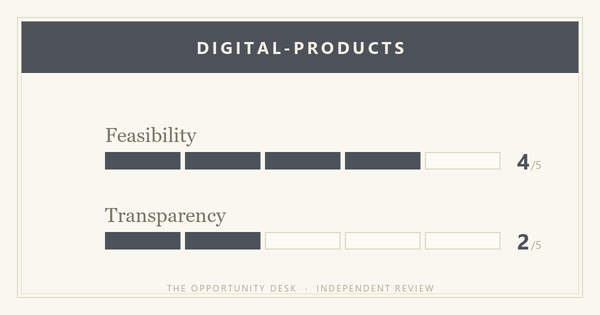
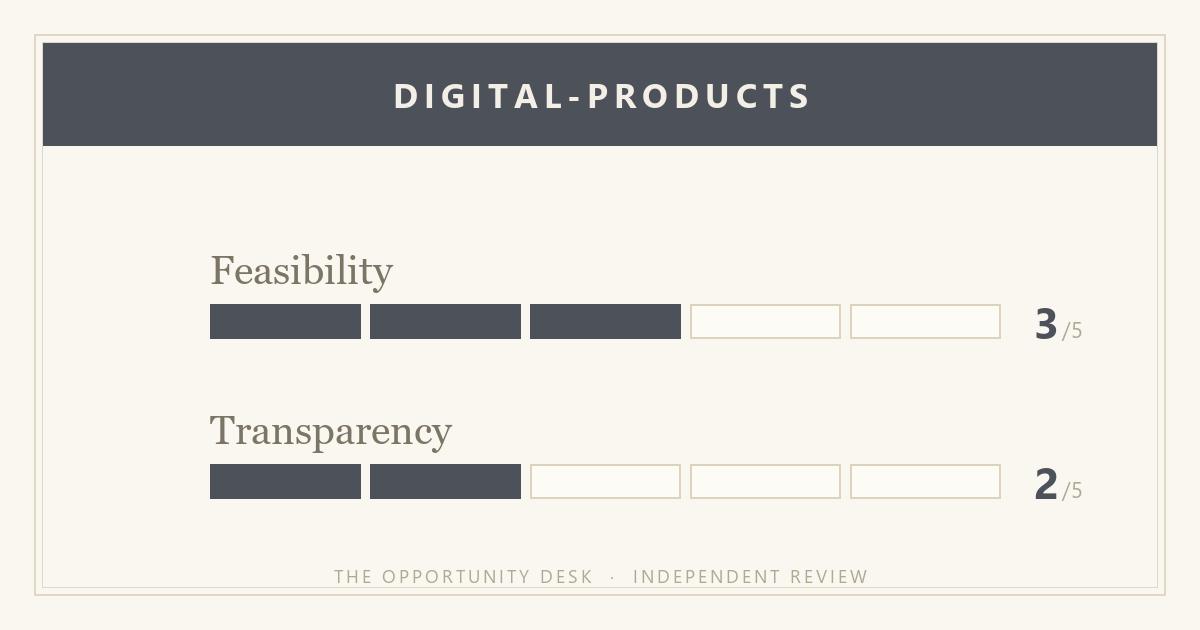
Feasibility: 3/5 — The underlying business - selling functional spreadsheet templates on Etsy - is viable. People do buy these products. Claude does generate working files. But the video presents a misleadingly short path to revenue and does not show anyone actually succeeding with this exact method.
Transparency: 2/5 — Gardner shows product research and file generation but omits her own results, the cost of tools, the time required for cleanup and listing optimization, Etsy's fee structure, and the competitive dynamics that determine whether a new listing ranks. The guest spent hours on the prompt; the viewer is told it takes minutes.