Chris Koerner: Forget Building Websites. Local Businesses Pay $4K/Month for This
Bob Brennan says an AI chat and voice concierge service for small-business websites grew to $25,000 to $30,000 a month in recurring revenue in a year. The model has real signal, but software costs, free-trial labor, and how typical his best client results are all go unanswered.
Source: “Forget Building Websites. Local Businesses Pay $4K/Month for This” — Chris Koerner on The Koerner Office Podcast, published November 2026. Watch on YouTube →
THE OPPORTUNITY
Bob Brennan runs what he calls an “AI concierge” business for small companies. He puts chatbots and voice agents on their websites to answer customer questions and capture leads. He says the business brings in $25,000 to $30,000 a month in recurring revenue after one year, serving about 26 clients who pay between $300 and $4,000 monthly.
HOW IT’S EXECUTED
- Build a chatbot or voice agent using GoHighLevel software that answers common customer questions by scanning the client’s website for information.
- Create a demo version on a sandbox site showing the client’s own business before pitching, so they can see it work with their actual products or services.
- Offer to install it free for 30 days, then price based on the lead value the client gets — Bob uses AI tools to research what a lead is worth in that industry.
- Spend one to two hours per month per client maintaining and tuning the system for clients paying $300 to $1,000, or up to 20 hours monthly for clients paying several thousand.
- Charge a one-time setup fee ranging from $1,000 to $5,000 depending on the complexity and the client’s traffic volume.
- Focus on industries where you can demonstrate clear ROI — Bob specializes in material handling businesses like forklift dealers and pallet racking companies.
WHAT’S CREDIBLE
Bob names specific client segments and results. He mentions a diesel engine rebuilder with roughly 8.8 million social media followers who got 50 leads in one month for engines that start at $13,000 each. He describes his own phone repair shop getting 60 leads from 130 AI interactions out of 350 to 500 monthly site visits. The math on recurring revenue checks out: about 26 clients averaging roughly $1,000 each lands in that $25,000 to $30,000 range he claims. His close rate of 30 to 40 percent for cold approaches is plausible for a service with a free trial and demonstrable ROI.
WHAT’S OMITTED OR OVERSTATED
Bob is 60 and says he’s “not a tech guy,” but he owns multiple tech companies and has run a digital marketing agency. That’s not the starting point of someone watching this video. He had existing clients to test on, and two businesses of his own to prove the concept on first. Those are significant advantages he doesn’t frame as advantages.
The transcript never states what GoHighLevel costs. Bob mentions his platform is $297, but it’s unclear if that’s monthly or a different tier. Software costs matter when you’re projecting 50 percent profit margins.
He says setup fees range from $1,000 to $5,000 but doesn't fully explain what drives that range. Is it hours worked? Client size? Complexity? It is probably a gut feeling based on interaction with the prospect. Without that, a newcomer has no pricing framework.
The 30-day free trial sounds risk-free, but Bob is absorbing setup costs and labor during that window. If 20 percent of trials don’t convert, that’s uncompensated work. He doesn’t quantify how much time or money he’s lost on failed trials.
Bob claims you can do this nights and weekends while working full-time, but he also describes spending 10 to 20 hours a month on higher-paying clients and 40 to 80 hours a month on a prospect paying $13,000 to $20,000. That’s not a side hustle. That’s a second job.
He says his close rate is 30 to 40 percent and calls it “not really great.” That’s actually a strong close rate for cold outreach. His surprise suggests he’s either underselling his own skill or his existing network is doing more work than he’s acknowledging.
The diesel engine rebuilder client has roughly 8.8 million followers across social platforms, by Bob’s own estimate. Bob frames this as proof the AI works, but a business with that kind of audience likely converts leads at a higher rate than a typical small business regardless of the chatbot. That result isn’t replicable for a forklift dealer with 500 site visits a month.
Bob says AI isn’t perfect and compares it to employees making mistakes, but he never discusses what happens when the AI gives a wrong answer that costs a client a sale or creates a liability issue. Who owns that risk?
He mentions using a web developer to scan knowledge bases when a site is locked down, but doesn’t say what that costs or how often it’s needed. If you can’t scan a site yourself, you’re paying someone else, and that cuts into the profit margin he’s projecting.
The transcript describes using Perplexity or ChatGPT to generate five demo questions, but Bob also says he uses SEMrush for traffic research and mentions tokens adding to software costs. These are additional subscriptions. The $300 to $400 monthly software cost he mentions early on doesn’t account for all of these tools.
Bob says there are 33 million small businesses in America and frames that as unlimited opportunity, but he also says 20 percent of his trials fail due to low traffic or wrong traffic type. He’s eliminated entire categories — government, banking, high-end corporate due to their culture and complexity, and “nice to have” businesses like med spas. The addressable market is smaller than 33 million.
He describes spending half an hour to an hour building a sandbox demo before walking into a business cold, but his close rate on cold approaches is 30 to 40 percent. That means for every three demos he builds, one or two go nowhere. That’s three to six hours of uncompensated work per signed client, and he doesn’t include that in his time estimates.
The voice agent feature is presented as a key differentiator, but Bob admits he hasn’t sold phone AI to most clients and is “sticking to his lane” with chat widgets. If voice is such a strong product, why isn’t he selling it? That suggests either the demand isn’t there or the execution is harder than the transcript implies.
Bob mentions edification and testimonials as critical to improving close rates, but he’s one year in with about 26 clients. A newcomer won’t have that edification for at least a year, which means their close rate will likely be lower than his 30 to 40 percent.
The episode also carries commercial relationships worth keeping in mind. Midway through, Koerner says GoHighLevel sponsors his channel, that Bob’s business is built on it, and that he earns a commission when viewers sign up through his affiliate link. Near the end, he promotes his own community, Playmakers AI, saying it has over 300 members, many earning thousands or tens of thousands of dollars a month, and invites viewers to book a call. Earlier, Bob tells viewers they would leave the episode with about 80 percent of the knowledge and should look to that group for the rest. None of this is concealed, but it means both the platform recommendation and the route to the missing 20 percent lead to products the host profits from. It would be helpful if the episode had addressed what the community costs, how many members actually reach those income levels, and whether any of those results come from this specific business.
BOTTOM LINE
This works if you can learn a specific industry well enough to demonstrate ROI in a first conversation. Bob’s material handling focus didn’t come from research or from owning businesses in that space. It emerged after his early clients began reporting large leads there, and he built his expertise from those results. If you don’t have early clients showing you where the value is, you’re starting further back than he did. The model is sound — businesses will pay for leads — but the path to the first five clients requires either deep industry knowledge, a strong network, or a tolerance for building free demos that go nowhere. You’re not building a side hustle in six months. You’re building a service business that requires ongoing client management, and the profit margins depend on keeping labor costs low while charging based on value delivered, which is a harder negotiation than Bob makes it sound.
OPPORTUNITY DESK RATING
FEASIBILITY
Evidence: Bob owns a phone repair business and a copier business, tested the AI on both, then sold it to existing clients, several in the material handling industry, who began reporting large leads.
Reasoning: The model works, but Bob’s path relied on owning businesses to test on and having early clients to learn from — most viewers lack both and would need to cold-prospect from zero, which Bob describes as lower-converting and more time-intensive.
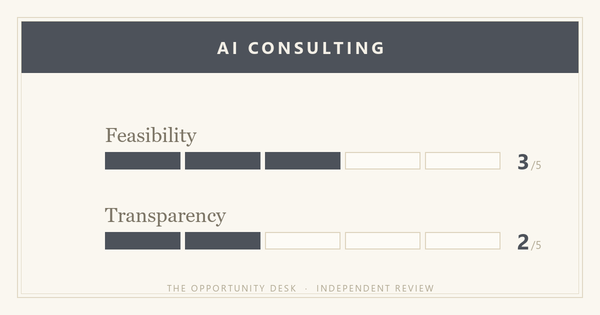
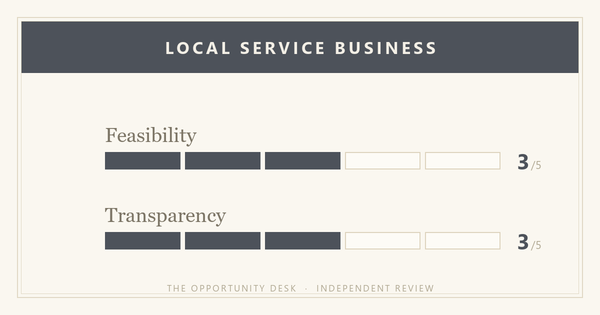
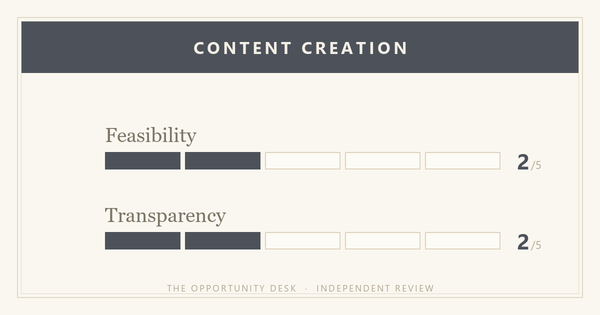
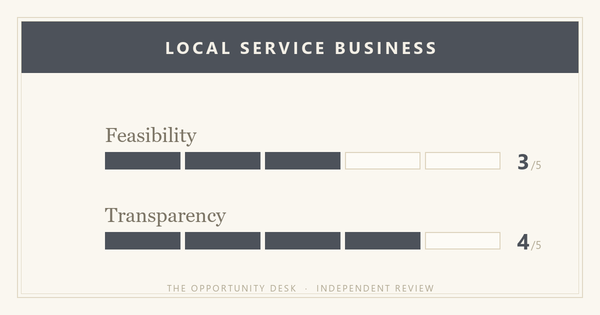
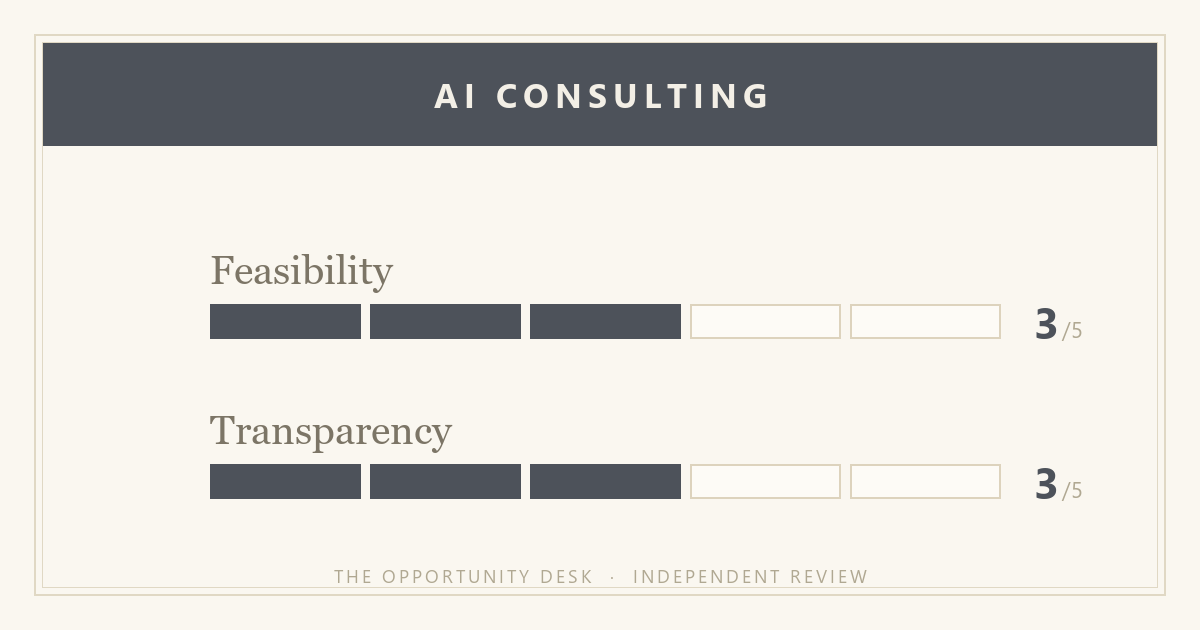
Feasibility: 3/5
TRANSPARENCY
Evidence: Bob states his monthly recurring revenue is $25,000 to $30,000 from about 26 clients, gives a range for what clients pay ($300 to $4,000/month), and specifies setup fees ($1,000 to $5,000), but never discloses total software costs, what drives setup fee variation, or how much uncompensated time he’s spent on failed trials.
Reasoning: Core revenue figures are specific and the client count is disclosed, but material cost factors (software subscriptions, developer fees, trial labor) and the basis for pricing decisions are vague or missing.
Transparency: 3/5