UpFlip: From $12 to 500 Franchise Units - Steven Lippold's Home Service Empire Story
A 21-year-old bootstraps a painting business to $500K in revenue, then franchises it into nearly 500 units. The hustle is real. The "$12 in his pocket" framing, the franchise unit count, and the video's recruitment agenda deserve a closer look.
THE OPPORTUNITY
Steven Lippold started a painting business at 21 with $12, scaled it to half a million in revenue over several years, then pivoted to franchising in 2021. He now operates Resi Brands, a platform of three home service franchises (painting as "The One Painter," window cleaning as "That 1," and garage services as "Garage Up") with nearly 500 franchise units sold across three years. The pitch is that home services, particularly painting, can be bootstrapped through door-knocking and realtor relationships, then scaled via franchising once systems are in place.
HOW IT'S EXECUTED
The early model was pure hustle:
- Quit the day job, knock doors until someone gave him a next-day painting gig, parlay that into neighbor referrals, cultivate realtor relationships for steady lead flow. No ad spend initially, just five sales channels: realtors, referrals, repeat business, reputation (reviews), and relationships (friends/family)
- Implement a "sun's up, I'm working" rule and use a CRM to systematize operations once revenue hits $400–500K
- Launch the franchise model after reading The E-Myth — instead of opening corporate locations, sell territories to owner-operators who pay royalties. Franchisees get brand systems, SOPs, and access to coaching including monthly sessions with leadership author John Maxwell
Sales are closed on-site when possible; follow-up is aggressive, 21 touch points across seven rounds (call twice, text, email with re-sent quote). The actual painting job shown: $3,700, 50% gross margin after subcontractor labor and materials, completed in 1.5 days by two people.
WHAT'S CREDIBLE
Door-knocking and realtor cultivation are tried-and-true low-cost acquisition strategies in home services, and painting has decent unit economics when you're the bottleneck. The $100K first-year revenue and gradual climb to $500K over "the next few years" tracks with a grinder who's doing estimates and managing crews. The 50% gross margin on a standard exterior repaint is realistic for residential work with subcontracted labor. The John Maxwell connection appears legitimate, Maxwell's team confirmed on camera and the mentor relationship is documented. The franchise growth numbers (approaching 500 units in three years) are aggressive but not impossible in a hot franchise market, especially if the brand differentiates visually (which the "Pinks" and "That 1" branding does) and offers strong unit-level support.
WHAT'S OMITTED OR OVERSTATED
The "$12 in his pocket" framing is dramatic but irrelevant, what mattered was that his wife had stable income covering rent, which gave him a financial cushion to grind without the threat of being homeless if he failed. That's a meaningful advantage over someone with zero household income.
The timeline is deliberately vague: "over the next few years" to reach $500K could mean two years or five, and the video never clarifies how long he operated as a local company before franchising. The franchise unit count (nearly 500) refers to sold territories, not operating locations generating revenue, a critical distinction the video sort of glosses over. Franchise sales and franchise success are different metrics. We don't learn failure rates, average franchisee revenue, or how many units are actually profitable.
The John Maxwell mentorship is positioned as a competitive moat, but monthly Zoom calls with a celebrity author, however valuable for mindset, are not a substitute for operational rigor or market advantage. Maxwell has great leadership teaching ability and is probably a wealth of life-skills knowledge for new franchisees. It's good marketing for franchise recruitment; whether it translates to franchisee profitability is uncertain.
The advice to "focus on customers, not marketing" is fine for a bootstrapped solo operator, but scaling 500 franchise units absolutely required significant marketing infrastructure that isn't discussed. The "21 touch points" follow-up system is textbook sales persistence, but no data is provided on conversion rates or whether this level of intensity creates brand fatigue.
The video is also a thinly veiled franchise recruitment ad: there's an exclusive deal for "UpFlip viewers" mentioned in the description, and much of the runtime is Steven explaining why Resi Brands is a great franchise investment. The editorial line between journalism and advertorial is kind of thin.
BOTTOM LINE
This is viable for someone with a spouse or partner covering baseline expenses, the temperament for relentless door-knocking and follow-up, and enough capital to float materials and subcontractor payments before customer payment clears. It is a grind. If you can execute at that level and avoid lifestyle creep, the painting-to-franchise path is a real template for success.
But the franchise opportunity itself, buying into Resi Brands, is a different animal. You'd need to independently verify franchisee earnings (Item 19 in the Franchise Disclosure Document), understand failure rates, and assess whether the branding and systems justify the royalty structure. The video wants you excited about the brand; you should be scrutinizing the economics.
OPPORTUNITY DESK RATING
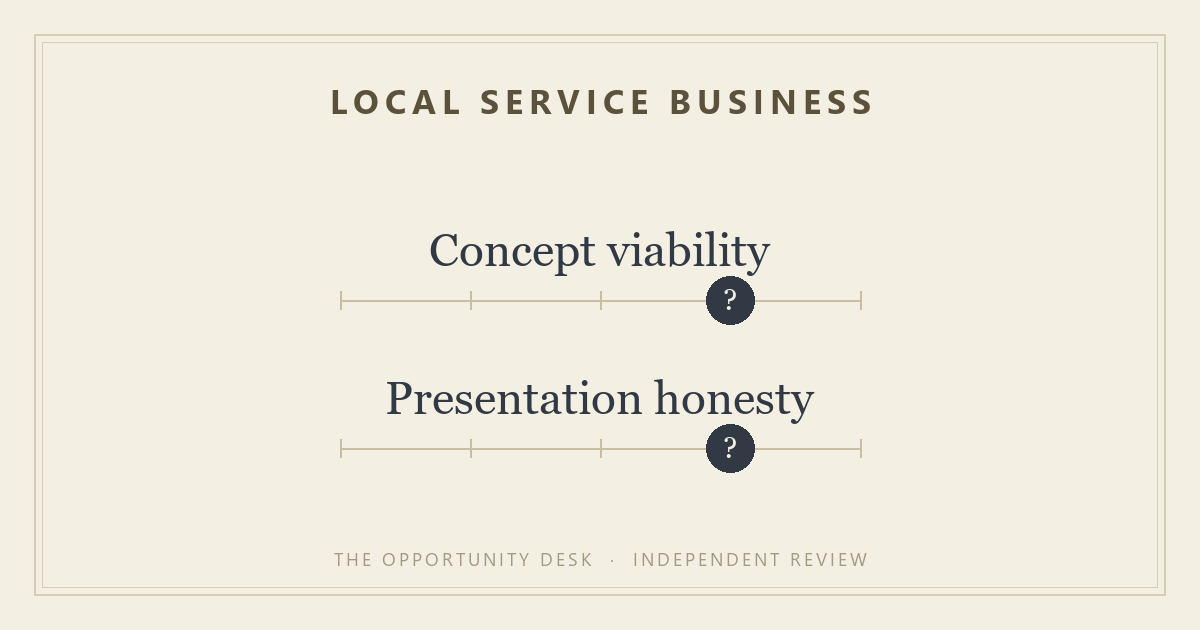
Concept Viability: 4/5
Home services are evergreen, painting has proven demand, and the bootstrap-to-franchise trajectory is a legitimate wealth-building path if you can survive the early grind and systematize things effectively.
Presentation Honesty: 2/5
The framing is aspirational but omits crucial context, his wife's income, actual timeline to $500K, the franchise unit vs. operating unit distinction, and lack of franchisee performance data. This is recruitment content dressed as entrepreneur inspiration, and key financial realities are sanded down. It's viable, but warrents much more due diligence.