The Koerner Office, The Most Underrated Side Hustle You Can Start With $0
Braden says he built an estate sale business from near-zero capital into a lead-generation funnel for real estate deals, citing a $6,000 first sale as proof of concept. That sale was a one-time 100%-commission favor. Under his own stated standard terms, it would have netted $2,100.

Source: "The Most Underrated Side Hustle You Can Start With $0" — Chris Koerner on The Koerner Office Podcast, published August 2026. Watch on YouTube →
THE OPPORTUNITY
Braden left corporate sales to run an estate sale business in central Arkansas. A service that liquidates the contents of homes for families dealing with death, divorce, debt, or downsizing. He says you can start for nearly zero capital (tape, price gun, borrowed tables). You take 35-50% of gross sales as your fee, and be cash-flow positive within a week. The pitch is that this business becomes a lead generator for off-market real estate deals, which is where the real money is made.
HOW IT'S EXECUTED
- Start an LLC, buy a price gun and tape, borrow folding tables from friends or churches.
- Post your company profile on estatesales.net (the dominant national marketplace where consumers find estate sales and homeowners find liquidators).
- Contact local real estate agents and elder law attorneys offering to handle estate liquidations — bring donuts to broker meetings and ask for 10 minutes to pitch your service.
- Walk the client's home, mentally estimate gross sales by room, and offer to liquidate for 35-50% of proceeds (industry standard is 35%; you negotiate higher for small or difficult estates).
- Price everything in the house using stickers or tape, stage items on tables, post photos of high-value items online, and run a 2-3 day sale (full price Friday, 25% off Saturday, 50% off Sunday).
- Collect all cash and card payments during the sale, reconcile within two weeks, and pay the client 50-65% of gross sales after deducting any marketing fees you absorbed.
- Haul unsold items to a local auction house (which also takes ~35%) or donate them. The client never sees leftover inventory.
- When a client mentions wanting to sell the house itself, offer to buy it directly or wholesale the contract to another investor.
WHAT'S CREDIBLE
The underlying business model is well established. Estate liquidation is a legitimate, unglamorous business that solves a problem for families in transition. The claim that you can start with minimal capital is true. Pricing guns cost $20 on Amazon, most clients have tables already, and estatesales.net dominates this niche. The 35% commission figure aligns with what others in this space describe publicly. The demographic tailwind is legit: the baby boomer generation is aging into exactly the life events (death, downsizing, divorce, debt) that create demand for this service. The connection to real estate investing is logical. If you're the first person through the door of a distressed property, you have an information advantage over other buyers.
WHAT'S OMITTED OR OVERSTATED
The $6,000 first-week story buries the lede: that sale was a favor from a real estate investor friend who let Braden keep 100% of proceeds. That is not how this business normally works. Under standard terms (35% commission, $6,000 gross), Braden would have netted $2,100, not $6,000. He also does not account for labor hours in his math. He says that first sale took 40 hours to prep, which would put his effective hourly rate around $50-75 per hour as a beginner, not $150.
The claim that you can be "cash flow positive your first week" assumes you land a client immediately, which is not addressed. He worked two unpaid training sales and leveraged a personal relationship to get his first paid gig. The average person has neither. Braden also glosses over the physical and emotional labor of this work. You're spending days in dead people's homes, pricing their personal belongings. Some of which you'd rather not see. You're managing strangers walking through those homes, and dealing with grieving or financially desperate families. This is not remote work. It is not passive. It smells like cigarettes and mildew.
The real estate component is presented as a natural extension, but Braden admits he eased out of estate sales to focus on real estate and now regrets it. That suggests the estate sale business itself was not lucrative enough to hold his attention once he saw the margins on flipping houses. He has done 60 real estate transactions in eight years. That is 7-8 deals per year, which is very respectable side income. He doesn't disclose how much capital or access to financing you need to execute even one wholesale deal, let alone scale to his level. He mentions hard money lenders and local banks but provides no sense of down payment requirements, interest rates, or how many deals he passed on because he could not secure funding.
Finally, the "$124 trillion wealth transfer" statistic is used to justify the opportunity is a fairytale number. Braden does not really explain how much of that applies to estate sales. How much sits in markets too small to support an estate sale business, or will just get donated rather than running an estate sale. The number sounds huge. The addressable market for any one operator is much smaller.
BOTTOM LINE
This is a viable local service business for someone willing to do unglamorous physical work. Someone who can tolerate irregular income, and spend their weekends in strangers' garages. It works best as a side hustle in a metro area that is large enough to generate consistent leads, but not so competitive that established players dominate. The real opportunity is not the estate sale fees themselves. It's the potential access to off-market real estate if you have capital, risk tolerance, and skill in property valuation. If you do not plan to transition into real estate investing, this is a decent way to make $30-50k per year part-time. If you do plan to flip houses, this is a clever but labor-intensive lead generation strategy that almost no one else is pursuing. You will need to be comfortable walking into people's worst days and asking to be paid for it.
OPPORTUNITY DESK RATING
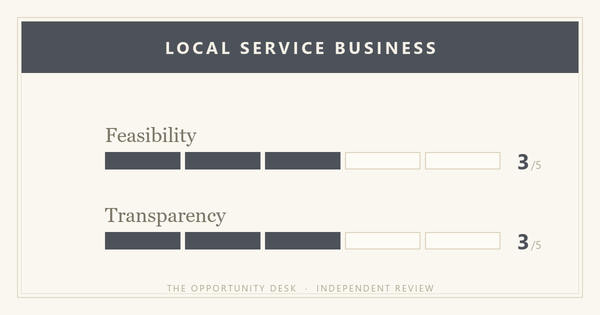
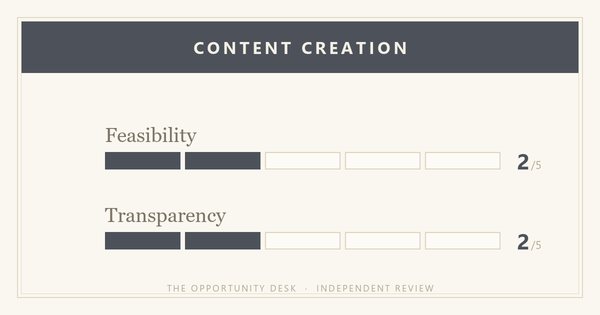
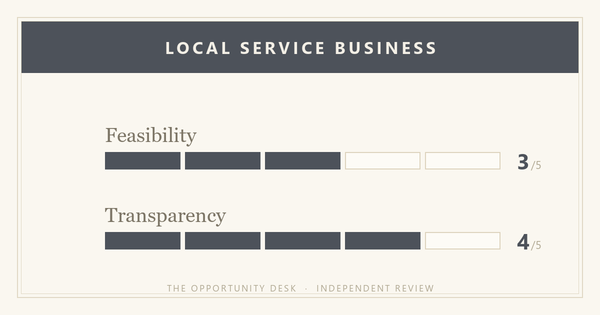
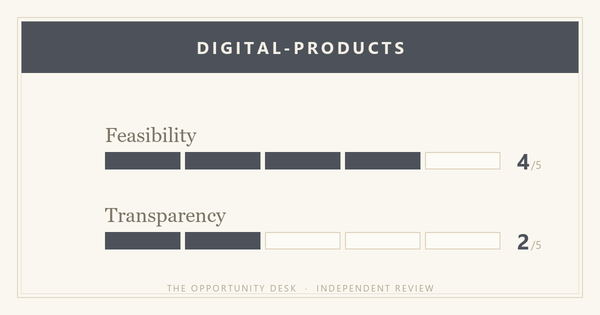
Feasibility: 4/5 — The underlying business model is sound, demand is real, and the barriers to entry are genuinely low. You can start this with under $500 and a weekend. Deducting one point because scaling past $50-75k in annual income requires either running multiple sales per weekend (which demands staff and logistics) or transitioning into real estate (which demands capital and a different skill set entirely).
Transparency: 3/5 — Braden is forthcoming about how the business works mechanically and does not oversell the glamour of the work. He admits it is tedious and unglamorous. However, the $6,000 first-week figure is misleading without the context that it was a 100%-commission favor, and he does not address how long it takes the average person to land their first client or what happens if you are not plugged into local real estate networks. The real estate angle is presented as an easy add-on, but he provides almost no detail on how much capital or credit access you need to execute even one wholesale deal. The video leans heavily on the wealth transfer statistic without addressing how much of that demand is already captured by existing players or diverted to junk removal and donation instead.