Greg Isenberg & Frey Chu: Claude Code Built me a $273/Day online directory
A seven-step AI-powered directory build promises $273/day from lead generation — and never actually demonstrates that revenue. The technical process is real and well-documented. The monetization gap between "form submissions" and "paid leads" is where the pitch quietly breaks down.
THE OPPORTUNITY
Build a hyper-specific online directory using AI coding tools (Claude Code) and web scraping to generate passive income through lead generation. The pitch: spend under $250 and four days of work to create a nationwide directory that ranks in search engines and attracts inbound leads worth thousands of dollars each — all without traditional coding skills.
HOW IT'S EXECUTED
The workflow involves seven concrete steps:
- Scrape business data from Google Maps using a paid tool called Outscraper (approximately $100 for national coverage)
- Use Claude Code to clean the raw data, removing closed businesses, duplicates, and irrelevant entries
- Install an open-source web crawler called Crawl4AI that visits each business website to verify niche relevance (in this case, luxury porta potties versus standard ones)
- Use the same crawler with iterative prompts to extract product inventory
- Scrape and quality-check images via Claude's vision API, identify amenities and features, and map service areas
- Feed the cleaned data into a database (Supabase)
- Have Claude Code generate the directory website itself
The business model centers on lead generation. When someone fills out a form, you sell that lead to the listed business. Alternative monetization includes display ads, affiliate commissions, or building vertical SaaS for the industry once you have traffic and relationships.
WHAT'S CREDIBLE
Lead generation directories are well proven. The examples cited such as Parting.com (funeral homes), A Place for Mom (senior living), GasBuddy — represent genuine businesses with verified traffic numbers and reported revenues in the millions. The technical process described makes sense: Outscraper exists and works as described, Claude Code can absolutely execute data cleaning operations, and open-source web crawlers can be configured to extract structured information from websites. The pain point of doing the work manually is true. Manually verifying and enriching 70,000 scraped records would indeed take hundreds or thousands of hours. Frey's own case study showing lead inquiries worth $20,000+ for porta potty rentals fits with what we know about event and construction service pricing. The seven-step framework is methodical, and the cost estimate of under $250 (Outscraper data, Claude subscription, API credits) tracks with current pricing.
WHAT'S OMITTED OR OVERSTATED
The $273/day figure in the title never appears in the episode. We see evidence of inbound leads on a prototype directory, but no demonstrated revenue, no closed deals, no proof that any business paid for those leads. Getting form submissions is one thing; building a reliable lead sales pipeline is another entirely. The video presents data collection as the hard part, but systematically omits the actual hard part: monetization. How do you price leads? How do you convince 725 luxury restroom trailer companies to pay you when they already get calls directly? What's your pitch? How many will say yes?
The examples of successful directories all took years to build domain authority and distribution networks. A Place for Mom didn't start generating 824,000 monthly visitors overnight. The SEO timeline is understated. Frey acknowledges it "generally takes time" and warns against expecting results in under six months, but then presents a four-day build process in a way that obscures the 12–24 month reality of ranking a new domain for commercial intent keywords. The "topical authority" advantage he describes is real but modest — having 1,000 pages about luxury porta potties helps, but you're still a zero-authority domain competing against established directories, Yelp, Google Business listings, and the businesses' own websites. He mentions building "nationwide" but gives no details on how to acquire the backlinks necessary to rank nationally, or even locally in competitive metros.
The image scraping carries unacknowledged legal risk. Frey briefly mentions it's a "gray area" and plans to "ask for permission" retroactively, but this is insufficient disclosure. Scraping copyrighted images, even from business websites, and republishing them commercially is not gray — it's copyright infringement unless you have license or fair use applies. This also violates the TOS of some scraper apps. His "I'll ask permission later" approach is not a legal strategy. Many small businesses won't respond or will say no, and you've already published. The advice to use "stock images" or "public images" glosses over the fact that most stock images require paid licenses, and genuinely public domain images of luxury porta potties are probably nonexistent.
The technical learning curve is minimized. Frey describes himself as "brand new to AI coding" and "only six months in," which might inspire confidence in non-technical viewers, but he's already built multiple successful directories over several years. He has domain knowledge, design sense, marketing intuition, and pattern recognition that comes from experience. A true beginner won't replicate these results in four days. The prompts shared are useful but require understanding when they fail and how to refine them. That's a skill that develops over dozens of hours of trial and error.
Finally, there's selection bias in the case studies. We see the directories that worked (funeral homes doing $1M+, senior living doing $50M+), but we don't see the hundreds or thousands of directory attempts that generated zero traffic and zero revenue. Survivorship bias is rampant in this space.
BOTTOM LINE
This is viable for someone with 6–12 months to invest, $500–1,000 in patient capital, comfort with ambiguity, and willingness to learn both AI tooling and outbound sales. The technical process is real and democratizes what used to require expensive developers. The business model is proven at scale. But this is not "passive revenue" in any honest sense — not until you've spent a year building domain authority, acquiring backlinks, closing your first 20 lead buyers, and systematizing operations. The strongest fit is someone who wants to learn SEO and AI coding through a structured project with potential upside, not someone who needs income next month. If you lack sales skills or patience for the 18-month SEO game, this will fail regardless of how good your data enrichment is.
OPPORTUNITY DESK RATING
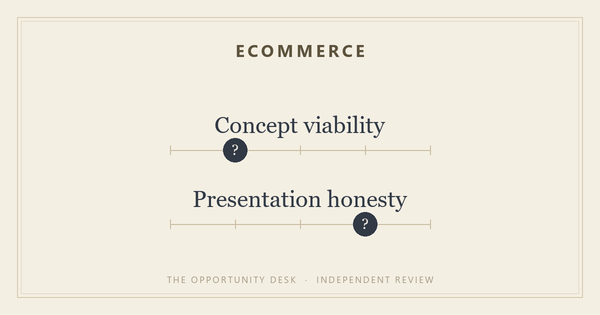
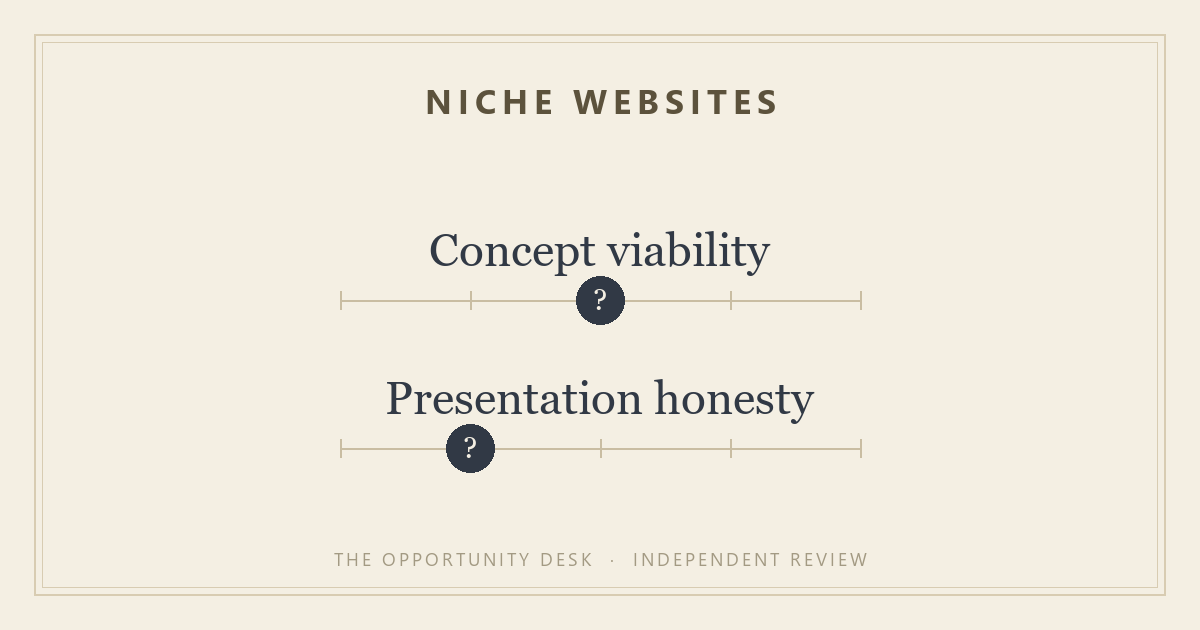
Concept Viability: 4/5
Lead generation directories are a proven business model with clear monetization paths and established competitors making real money. The AI tooling genuinely reduces the technical and cost barriers that existed two years ago. The core idea — create value by aggregating and enriching hard-to-find information, is sound.
Presentation Honesty: 2/5
The title promises $273/day revenue that's never substantiated in the episode. The video conflates lead generation (easy) with lead monetization (hard) and underplays the 12–24 month SEO reality. Legal risks around image scraping are acknowledged but minimized. The technical difficulty is understated by someone with years of domain experience presenting to absolute beginners.